Tuesday, August 5, 2014

Wimp Factor 14: A retrospective and interview with Frank Boscoe


Pittsburgh's Wimp Factor 14 was included in the final Trouser Press book,The Trouser Press Guide to '90s Rock. It said that the band "mixes basic strum-pop with interesting instrumental touches (melodica, toy ukulele, zither, plastic bucket drums and so forth) to achieve an unusually inviting sound." I was obsessed with the Trouser Press back then, but that's not where I heard of Wimp Factor 14.

I mail-ordered the band's sole album, Ankle Deep, from Harriet Records when it came out in 1993. I had never heard anything by Wimp Factor 14; I just liked their name and was interested in Harriet Records, because I had (and still have) the early Magnetic Fields singles on Harriet. Also, the Ajax Records catalog described Wimp Factor 14 as "chamber pop," a term that was sometimes used to describe to the Go-Betweens. I was a huge Go-Betweens fan, so I hoped that Wimp Factor 14 would sound something like them. 

Wimp Factor 14 didn't sound much like the Go-Betweens, but I liked them anyway. There is a kind of brainy, ramshackle indiepop that comes out of the northeast US, and WF14 is an example of that, like Winter Vacation and Pants Yell!

The members of Wimp Factor 14 on Ankle Deep included Kate Glicksberg; Gary Miklusek, who played with Tullycraft; Joelle Levitt, who played in the B-3's; Rob Washburn; and Frank Boscoe. Boscoe went on to form the Vehicle Flips and then the Gazetteers. Rob Christiansen of the Eggs produced Ankle Deep, and the Eggs recorded WF14's song "Rebuilding Europe" for their 1994 album Teenbeat 96 Exploder.

In addition to the one album, Wimp Factor 14 cut a handful of singles and compilation tracks, most of which are included on the anthology The Bric-a-Brac

Today Music Weird talks to Frank Boscoe about this great little band.


How did Wimp Factor 14 come about?

It was a bunch of friends from Carnegie Mellon with ties to the campus radio station, WRCT.


I bought Ankle Deep because I liked the band name. What do you think were the ups and downs of that name?

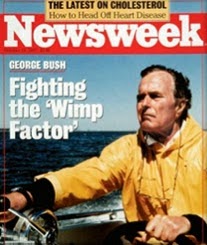
On the whole, I think it is best to avoid band names grabbed from the day’s headlines [see image below]. That said, I think “The Right to Be Forgotten” would be a good band name.

That reminds me, while the band was active, there was a newspaper story with the headline “Donny Osmond Battles the Wimp Factor,” which could have made for some outstanding album cover art.


Harriet Records had a pretty well-defined aesthetic. Did you find Harriet or did Harriet find you?

I knew Tim Alborn even before I was in a band. I had a fanzine called Cubist Pop Manifesto, and Tim had a fanzine called Incite!, and we became pen pals. As a wedding present, I gave him a song I recorded with Karl Hendricks, which much later made it onto a Harriet compilation. 


Did you feel like you were part of a scene there?

I did think our shows in Boston, both with Wimp Factor 14 and later Vehicle Flips, were among the best I ever had. It was great playing with the Magnetic Fields, Twig and its several related bands, and, later, Prickly. I believe I played in Boston every year from 1990-1997. I can confirm this; I have a list of all the shows I ever played, but it’s on a different computer. 

[Note: There were four Wimp Factor 14 shows in Boston, all at the Middle East: June 1991 with Unrest, Love Battery, and Crazy Alice; December 1991 with Magnetic Fields and Cul de Sac; June 1992 with Crayon, Lotus Eaters, and Naked Lunchbox; and October 1993 with Tiger Trap, Spinanes, and Lotus Eaters.]


The CD version of Ankle Deep had elaborate nontraditional packaging. Was it a pain to put it all together? Did the packaging affect the album's commercial prospects?  

Most of the credit for the packaging should go to Kate Glicksberg and Rob Washburn. Well, I guess I wrote most of the words in the booklet. Kate was a design major and really knew what she was doing. 

If anything, it probably helped sales. Stores couldn’t put it in the usual bins, so some of them put it by the register with other oddities. The really remarkable thing is that a band like Wimp Factor 14 could sell 1,000 albums plus another 500 or so via the German vinyl release and be considered inconsequential. These days, the benchmark for success on a label like Jigsaw is 50 copies. It is mind-boggling.


CDs often had bonus tracks, but the Ankle Deep LP on Little Teddy has bonus tracks that weren't on the CD: "Change of Address Kit" from the ...One Last Kiss compilation, and "Sick Building Syndrome." Were they album outtakes? How did they end up on the LP? 

They were songs that Andy Freiberger from Little Teddy liked and wanted to include. “Change of Address Kit” made some sense, because it got to be one of our better-known songs since that compilation did so well. “Sick Building Syndrome,” less so. Both songs were taken from the session that generated the last two singles ("Botch" and "Miracle Mile"), not the Ankle Deep session.


I remember that the Ajax Records catalog described Wimp Factor 14 as "chamber pop." How would you describe the band? Did you try to sound like anyone? 
 
With Wimp Factor 14, we had all—except for Gary—been DJs at WRCT for three or four years, so we were well-steeped in the indie sound circa 1990. Our record collections didn’t necessarily overlap all that much, though. But unless you are explicitly, consciously trying to emulate some particular sound—which some bands do, of course—I think you just end up with a hybrid of what everyone brings with them, not only based on tastes but also on the gear you have as well as your playing ability, even where you are able to rehearse. The end result is still likely going to sound like something familiar and recognizable, but still distinctive. 

I think this relates to how rock/punk/indie is still the default programming on college radio 25 years later, and all of the more narrowly defined specialty shows are still the same narrowly defined specialty shows. There are endless combinatorial possibilities.


Wimp Factor 14 toured with Crayon. What was the tour like? 

It was actually the only tour I ever had. Everything else was just a long weekend. Even the tour with Crayon was pretty short: two weeks. We had a show all but one day, and relatively short drives for the most part, thanks to the great booking of Vicky Wheeler, who would go on to found Autotonic. We got as far west as Iowa. We got to be good friends with Crayon—Gary Miklusek, of course, would later be in Tullycraft—and rode in each other’s vehicles for variety’s sake. 

Crayon had an old VW camper van that required leaded fuel; we had an ordinary sedan with the gear in a clamshell on top. Given that limited capacity, we necessarily borrowed a lot of things. During the longest drive, which I think was Pittsburgh to Richmond, we tried to identify the 64 colors in a standard box of crayons. As I recall, the one we never got was orchid; Jeff from Crayon insisted there was a color called “smoke.” 

During our one night off we got to see Jonathan Richman in Bethlehem, PA. We kept meticulous accounting, and at the end had a net profit of $4: $1 each. 


What were some of your most notable successes with Wimp Factor 14?

Getting included in the Trouser Press Record Guide was possibly our biggest claim to fame, and a big deal for me personally, as in high school this was my bible. We almost got to tour Europe, supporting the Chrysanthemums for a few weeks, but the details were always vague and never quite materialized. I couldn’t convince Gary or Rob to buy tickets, but Kate and Joelle were up for it, and the three of us did end up playing three shows in Germany, thanks to Andy Freiberger, though only one of these was a real show. The other two were more like parties. 


And then you formed Vehicle Flips? Which didn't sound extremely different from WF14.... 

After this experience I was kind of burned out and decided something different was in order, though, as you point out, it wasn’t that much different.

I also wanted to add that we came up with something with the band Eggs that I believe rates a tiny footnote in the annals of music. I was thinking a lot about how set changes were so slow and inefficient. In a world of 35-minute sets, 20 minutes between bands soaks up a lot of time. Of course, that ratio is good for the audience to converse and buy drinks, so maybe it wasn’t even a problem. Anyhow, one way around this was to have one band’s last song be the next band’s first song. Presuming that amps and drum kits are being shared, players could leave and be replaced one by one while the song continued. We selected the song “Hydroplane” by Unrest because it is one chord and can be played as long as necessary. We managed this twice: once with Wimp Factor 14 first, once with Eggs first. I doubt if any recording exists. We weren’t very good at documenting ourselves beyond through the records.


Do you have any band photos? Few photos of Wimp Factor 14 seem to exist.

I asked Kate if she had any unpublished photos. She reminded me of the photos taken during the Ankle Deep recording, which coincided with one of the larger snowstorms to ever hit DC in our lifetimes. There are some great images of us during heavy snowfall. She said they would be in her mom’s basement, so it could be a while until they are found, but eventually we’ll get something to you. As for video, I don’t know of any at all. It’s true that camcorders weighed 10 pounds back then, but that didn’t stop every other band. What were we thinking? 

Discography


Train Song 7" (Harriet 005, 1991)
  • Train Song // I'll Send You a Postcard

Botch 7" (Harriet 015, 1992)
  • Botch // Bog / Elvis (actually "Blue Moon of Kentucky")

One for the Record Books 7" (Four Letter Words FLW 006, 1993)
  • One for the Record Books / Rebuilding Europe


Vault 7" (Harriet Records 023, 1993)
  • Infotainted / Miracle Mile


Ankle Deep CD (Harriet Records SPY 1, 1993)
  • Jittery and Wobbling / The Heart of My Stupefaction / I Is for Incomplete / Steam Rolling, But It Wasn't Steam Rolling / How to Avoid Losing Small Objects / Stationery from Work / (It's Okay to Work For) Rockwell International / Role Model Glue / Ankle of Repose / Tale of the Loophole Guy / Stratego / Holiday Park Flyer / 1993 Comeback Player of the Year / Adjustment 


Ankle Deep LP (Little Teddy BiTe003, 1993)
  • All of the tracks from the CD plus "Change of Address Kit" and "Sick Building Syndrome" 


The Bric-a-Brac (No label; CD-R compilation of singles and stray tracks)
  • I'll Send You a Postcard / Rebuilding Europe / Botch / Infotainted / Good Morning to You / Train Song / One for the Record Books / Bog / Miracle Mile / Ginko / Elvis (actually "Blue Moon of Kentucky") / Deep from the Ankle
     

Compilation appearances


...One Last Kiss (spinART spart-1, 1992)
  • Includes Wimp Factor 14's "Change of Address Kit"


He Didn't Even Draw a Fish on My Shower Curtain (Mermaid MIRABELL 001, 1992)
  • Includes Wimp Factor 14's "Sick Building Syndrome"


A Tribute to Daniel Johnston Vol. 1 EP (Little Teddy LiTe707)
  • Includes Wimp Factor 14's version of "Good Morning You"


Candybars (Little Teddy LiTe 728, 1995)
  • Includes Wimp Factor 14's "Hibachi"


Saturday, August 2, 2014

"Teen-agers will temporarily desert rock and roll for the waltz": David Seville's 1959 hit "Judy"


He’ll forever be known as Alvin & the Chipmunks’ “Dave,” but David Seville made a number of non-Chipmunks recordings under the pseudonym David Seville and under his real name, Ross Bagdasarian. 

In 1959, after he'd notched two huge hits with the proto-Chipmunks song "Witch Doctor" and the debut Chipmunks single, "The Chipmunk Song (Christmas Don't Be Late)," Seville released a mostly instrumental waltz, "Judy." You can hear it in the video above. 

The record includes bits of dialog between a man and woman—George and Judy—as if they're dancing to the tune. Revealing Bagdasarian’s comedic streak, the dialog incorporates a touch of humor; when the woman asks the man what his name is, he nervously says “Judy” before correcting himself. 

“Judy” is similar to Seville’s minor 1957 hit “Gotta Get to Your House,” which is also mostly instrumental but has a man speaking (and misspeaking) a few lines. "Gotta Get to Your House" is a much weirder record than "Judy," though. It's like a theme song for stalkers.


Seville's label, Liberty Records, had a hard time getting television record hops to play "Judy," because disc jockeys didn’t think that teens waltzed. Waltzes were for old people who listened to Wayne King and Lawrence Welk, right? In an attempt to overcome the disc jockeys' resistance, Liberty's East Coast sales rep, Jane Gibbs, convinced some hops to hold waltz contests for teens. 

Thanks to her efforts, a number of disk jockeys fell in line, including WJZ's Buddy Deane, WTTG's Milt Grant, and WNHC's Jim Gallant. Liberty even provided cash prizes for the contests: the winning couples received $50 gift certificates. 

"Teen-agers will temporarily desert rock and roll for the waltz if Liberty Records' Eastern representative Jane Gibbs has her way," Billboard wrote in May 1959. I detect a note of skepticism in the Billboard article.

Buddy Deane's show was the first to run the contest. It spanned three weeks and featured daily spins of Seville's "Judy." Viewers were invited to write in with their votes for the best couple.

Were these promotions successful? "Judy" peaked at #86 on the Billboard pop chart, where it stayed for all of one week. 

Jane Gibbs, by the way, was a well-liked Liberty rep who worked for the company through the 1950s and 1960s before moving to Motown Records in 1967. In 1969, she co-authored the Motown songbook The Motown Sound: The Sound of Young America.

David Seville, AKA Ross Bagdasarian

Tuesday, July 22, 2014

The Intruders' "Fried Eggs": Minimalist New Jersey Rock from the '50s


New Jersey's Intruders notched a minor national hit with "Fried Eggs" in 1959. Nationally, the single peaked at only #73 in Billboard, but it was a big hit in some markets. At Seattle's KOL, for example, it reached the Top 10.

The Intruders consisted of two electric guitarists and a drummer. The guitarists were the Mitchell brothers, George and Augie, who were 17 and 29 years old at the time. Augie had played minor league baseball, and the brothers rated baseball second only to music among their passions. The drummer was Joe Rebardo. Augie was an Air Force veteran and Joe was a Marine Corps veteran. 

The Intruders were discovered while playing at a New Jersey Holiday Inn in 1958. Lee A.C. Gallo Jr. and Larry Bennett from Fame Records saw them and signed them to Fame, which was a subsidiary of Gallo's Gallo Records label. (Gallo also ran the music publishing firms Aurelio Music and Leeann Music.)

The Intruders' first record for Fame was "Fried Eggs," which George Mitchell wrote as a tribute to a relative whose nickname was "fried eggs." The songwriting credit was split between Mitchell, Gallo, and Ben Smith. According to Dead Wax, Smith had been a saxophone player in Andy Kirk's Mighty Clouds of Joy and owned the New York record labels Teenage, X-Tra, Tra-X, and others. Smith is credited as the writer or co-writer of 62 songs in the BMI database, but "Fried Eggs" appears to be the most successful one with his name on it.


The B-side of "Fried Eggs" was "Jefferie's Rock," which has the same composer credits.


The Fame label says "Vitasonic Sound" beneath the catalog number. Vitasonic was an audio technology in the film industry, but here it is probably only hype. 

The success of "Fried Eggs" was substantial enough to land the Intruders appearances on American Bandstand and on Alan Freed's television show.

The group followed up with a novelty adaptation of "O Tannenbaum" called "Frankfurters and Sauerkraut" (b/w "Creepin"), which was mostly instrumental but had occasional vocal interjections. 


The group's third and final Fame single, "Rock-A-Ma-Roll," was also released in 1959. It must be a rare single, because I couldn't find much information about it. The flip side was "Era-Rock-A."

After that, the group released one single on Beltone in 1961, "Camptown Rock" b/w "Morse Code." A number of groups have been called "the Intruders" over the years, but this is definitely the same Intruders that recorded "Fried Eggs," because the "Tequila"-esque "Morse Code" is credited to Mitchell/Rene/Gallo.


George Mitchell said in a YouTube comment that Augie Mitchell passed away about a year ago. George still plays music three nights a week and says that the secret to success in music is to "play with simplicity."

Friday, July 18, 2014

101 Strings' best and weirdest albums


A lot of people today think of 101 Strings as a generic easy-listening franchise that appealed only to casual music buyers who had no taste, but some of the 101 Strings records were very popular with all age groups. Believe it or not, Dick Clark featured the 101 Strings album Back Beat Symphony on American Bandstand in 1961, and within a month, the single from the album had sold over 400,000 copies. In 10 years, the ensemble sold 50,000,000 records. 


Although 101 Strings released countless albums of movie themes and romantic themes, its vast discography also includes some oddball albums, many of which seem likely to have alienated the average 101 Strings listener. Today on Music Weird, we'll look at some of the best and weirdest albums of the 101 Strings.


Back Beat Symphony (1961)

The album Back Beat Symphony was one of several attempts around that time to combine light classical and traditional orchestral pop music with rock 'n' roll rhythms. Other examples include Ray Conniff's Concert in Rhythm (1958) and Ray Martin's Rockin' Strings (1961). 

Back Beat Symphony was reissued in its entirety on the CD Rock & Roll Symphony No. 1: A 1959 Stereo Concert.


Sounds and Songs of the Jet Set (1965)

Sounds and Songs of the Jet Set is another one of 101 Strings' sporadic rock-oriented efforts. The snazzy illustrated cover looks like something out of a travel magazine, and the theme of travel continues halfheartedly throughout the track list. Although most of the album's musical destinations are Latinesque, such as "Puerto Vallarta" and "Bahia de Acapulco," others seem random, like "A Hard Day's Night." Musically, it's pretty bombastic for a 101 Strings album, especially "Cantina Tarosa." Here is the album's "Killer Joe a Go-Go":


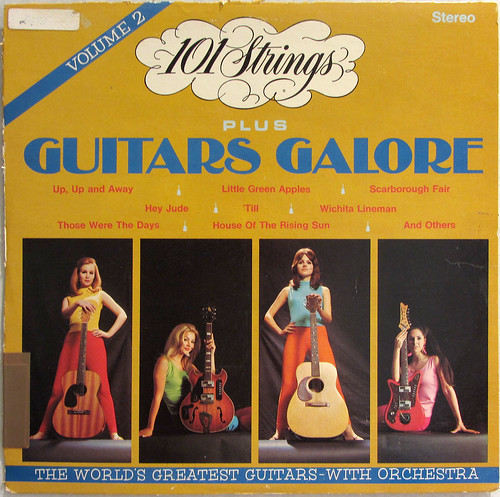
Plus Guitars Galore (1966) and Plus Guitars Galore Volume 2 (1969)

The two Guitars Galore albums are among my favorite 101 Strings albums. They both prominently feature guitars on arrangements of contemporary selections such as the Beatles' "Hey Jude" and Chris Montez's "Call Me." Alshire Records reissued Guitars Galore on CD in the 1980s. 


Sounds of Today (1967) 

Sounds of Today has one of the best album covers of all the 101 Strings albums. The music isn't quite as psychedelic as the cover art, but it has its moments. Some of the notable original cuts—"Karma Sitar," "Blues for the Guru," and "Strings of Ravi"—appeared on several subsequent 101 Strings albums. 


Astro-Sounds from Beyond the Year 2000 (1968)

One of the few 101 Strings albums that has been reissued by a label other than Alshire or Madacy, Astro-Sounds from Beyond the Year 2000 is definitely one of the ensemble's weirdest efforts. Really, only the Sounds of Love albums rival it. You know that you're in for something different from the average 101 Strings album when you see titles like "Re-entry to Mog," "Astral Freakout," and "Barrier X-69."

The album rocks pretty hard with fuzz guitar and synthesizers. It was reissued on CD by Scamp Records in 2009 and was fetching high prices for a while, but now you can get it for cheap as a print-on-demand CD-R on Amazon. The CD includes a few bonus tracks from the 1970 album Exotic Sounds of Love


Plays Hits Written by the Beatles (1968) 

This is one of the more collectable 101 Strings albums, because of the Beatles connection. "Hard Day's Night," which appeared on the album Songs and Sounds of the Jet Set, reappears here. True to form, 101 Strings slip in a few cuts that aren't Beatles songs at all: "Blues for the Guru" (from Sounds of Today) "Six Pence and You," and "Tropic of Chelsea." 

Monty Kelly, one of the staff arrangers for 101 Strings, wrote "Blues for the Guru" as well as many of the other original 101 Strings compilations that crept into otherwise thematic collections like this one.


The Sounds of Love (1969) and The Exotic Sounds of Love (1970)

The Sounds of Love and The Exotic Sounds of Love were two of 101 Strings' forays into the realm of erotic music. They aren't the only examples of risque content on 101 Strings albums, though; a couple of 101 Strings albums even had photographs of nude women on the cover

The Exotic Sounds of Love is better than The Sounds of Love. It contain some tracks from Sounds of Today with the addition of a woman's orgasmic moaning, similar to Jane Birkin and Serge Gainsbourg's "Je t'aime... moi non plus," which was a huge international hit in 1969 and certainly inspired these two 101 Strings albums. On Sounds of Love, some guy recites bad poetry between the orchestral instrumentals. The Exotic Sounds of Love is much harder to find than The Sounds of Love. And what's going on in that cover photo?


Polkas (1971) 

Symphonic polka is an underexplored genre of music. This 1972 album was also released on 8-track tape.


Swingin' Songs (1972)

101 Strings' quadraphonic album. 


Journey into Space (1979)

Features the themes from Star Wars, Superman, and Battlestar Galactica along with space-themed cuts like "Uranus" and "Memories of Venus."


Plus Plus Plus (1986)

This CD on Alshire Records doesn't appear to have had a vinyl counterpart. It is a collection of rock-oriented songs from earlier 101 Strings albums, many of which appear on this list: "Hey Jude," "Karma Sitar" (without the orgasmic moaning), "Killer Joe," etc.


Thursday, July 17, 2014

The mysterious Charlie Blackwell and "Midnight Oil"


Charlie Blackwell

Charlie Blackwell was a one-hit wonder whose one hit didn't even crack the Top 40. The hit was "Midnight Oil," a whistling tune on Warner Bros. Records that was composed by Walt Disney's Sherman Brothers. It peaked at #55 on the Billboard pop chart in 1959.

It's hard to find any information about Blackwell, and little was said about him even during his brief heyday as a pop semi-star. The ads for his records never pictured him or gave any information about him other than his name and the titles, and Billboard never profiled him or reported on his doings other than to mention that he used to be a jazz drummer of some note. 

Blackwell was born in Seattle in 1921, the Billboard chart books say, and played drums with numerous jazz bands, including those of Count Basie, Kid Ory, Shelly Manne, Stan Kenton, Dave Brubeck, Monte Easter, and Eddie Heywood. Blackwell shouldn't be confused with British bandleader Charles Blackwell or Tulsa drummer Chuck Blackwell.

Blackwell cut five pop and rock singles in the '50s: one for Decca in 1958 and four for Warner Bros. in 1959. The Decca single was a vocal number, a rock 'n' roll cheating song called "KX2 Secret Spy." The flip side, "Glory," was the "Pick of the Week" at KDAY in Los Angeles.

Blackwell moved to Warner Bros. the next year and bowed with "Midnight Oil," which was a strong seller in some regions—especially San Francisco and St. Louis, where it reached the Top 20. Warner Bros. advertised Blackwell alongside its other hit artists of the time, such as Tab Hunter and Don Ralke.

Unlike Blackwell's other singles, "Midnight Oil" is vaguely jazzy. It features simple instrumentation—a piano, upright bass, and drums—and Blackwell's whistling. 

Billboard's review of "Midnight Oil"


"Whistlin' Dixie," a whistling followup to "Midnight Oil," got some airplay in Boston but didn't reach the national charts. The flip side, a teen rocker called "Kath-A-Leen," did well in Albany, New York, and San Francisco. 

Billboard's review of "Whistlin' Dixie"

Billboard gave Blackwell's third Warner Bros. single, "Blue Bird of Happiness," a three-star review and said, "Blackwell has an attractive, mild rock version of the old Jan Peerce ork. Lush horns assist. Side starts with a spoken intro." Billboard gave the flip, "Josephine," three stars too and said, "Peppy vocal by Blackwell on a charming ditty with bright chorus and ork support." The latter side competed with recordings of the same song by Bill Black's Combo, Wayne King, Johnny Maddox, Russ Morgan, Lloyd Mumm, and Lawrence Welk.

Blackwell's fourth and final Warner Bros. single wasn't a hit at all but has attracted as much attention as "Midnight Oil." The single, "Choppin' Mountains," is notable because of its B-side, "The Girl of My Best Friend." The song was later recorded by Elvis Presley and then covered by Elvis sound-alike Ral Donner, for whom it became a hit. Blackwell's recording is the first version of the song, though. He recorded it with Warner Bros. label-mate Don Ralke.


Billboard's review of "Choppin' Mountains"


The image at the top of this page is from the cover of a privately released album that Blackwell cut in 1975. It was issued on Chafay Records of Foster City, California, and coincided with Blackwell's regular performances as the Charlie Blackwell Trio at the Villa Hotel in San Mateo, California.

Larry Hatch, who used to maintain a popular database of discredited UFO sightings, played in the Charlie Blackwell Trio and says that drummer Tom Widdicombe was the third member. Hatch said that Blackwell "had a terrific voice, something like Nat King Cole only more powerful," and was "kind of bull-headed, but not a bad guy." Hatch also said that Blackwell claimed to be of Native American descent.

Tommy Widdicombe, by the way, played with Tommy and Jimmy Dorsey and appeared on Jimmy Dorsey's Dot album So Rare. He was featured in an ad for Ludwig drums in the '50s.

An ad for Ludwig drums that features Tommy Widdicombe

That's as far as I got in uncovering the Charlie Blackwell story. Here is Blackwell's minor hit, "Midnight Oil."


Wednesday, July 9, 2014

In search of the one-chord song


Trying to write a one-chord song is a time-honored challenge among songwriters, but trying to find a song that actually adheres to the one-chord limit is also a challenge. 

It's a challenge in pop, rock, and country music, that is. In blues, one-chord songs are fairly common. Floyd Jones' "On the Road Again" from 1953 and Boozoo Chavis' "Paper in My Shoe" from 1954 (technically zydeco, but whatever) are a couple of examples. John Lee Hooker is a master of the one-chord song. In funk and reggae, quite a few songs are essentially one-chord grooves, like James Brown's "Get Up Offa That Thing" and Bob Marley's "Get Up Stand Up." 

Many songs that start out as one-chord songs eventually resort to using other chords. Examples include Donovan's "There Is a Mountain," Robyn Hitchcock's "Superman," Stereolab's "Emperor Tomato Ketchup," and the Beatles' "Tomorrow Never Knows." 

The Beatles seem to have had a particular interest in the one-chord songwriting challenge, because, in addition to "Tomorrow Never Knows," the songs "Norwegian Wood" and Wings' "Helen Wheels" (below) appear to have been composed along similar lines.

Today on Music Weird, we'll listen to some one-chord songs, beginning with a couple of one-chord songs that Keith Urban and Stoney LaRue wrote about one-chord songs. If you know of others, please add them in the comments! 


Keith Urban – "One Chord Song"


Stoney LaRue – "One-Chord Song"


Neu! – "Hallogallo"

An instrumental, not a "song," but still. Ten minutes on one chord. 


Ozark Mountain Daredevils – "Chicken Train"


The Stooges – "T.V. Eye"


Wings – "Helen Wheels" 


Mojo Nixon & Skid Roper – "The Story of One Chord"

No video. Audio snippet here

Palace Brothers – "(I Was Drunk at the) Pulpit"


Unrest – "Hydroplane"


Wednesday, July 2, 2014

Hershel Savage and the American Flag: A retrospective and interview with Ayal Senior


I used to love to go to Used Kids Records in Columbus, Ohio. It was one of my favorite record stores anywhere. Ron House from Thomas Jefferson Slave Apartments worked there, and Used Kids always had tons of cheap CDs and vinyl as well as interesting locally released stuff on OKra Records, which was the Used Kids label run by Dan Dow. The Schramms' Walk to Delphi was one of my favorite releases on OKra. 

I bought my first Guided by Voices CD at Used Kids—Vampire on Titus/Propeller—when Scat Records first put it out. A friend of mine who had previously seen GBV live suggested that I get the CD. I did, and as I paid for it and the gazillion other records I bought that day, Ron House told me that Propeller was better than Vampire on Titus. I think he was right, but I liked them both. That was in 1993.

I went to Used Kids again in 1998 and saw a CD by Hershel Savage and the American Flag on the wall. A handwritten sign said that the release was on GBV's label, Rockathon. 

That was enough for me. I bought it without ever having heard a note. 

In the four-hour car ride home, I listened to it and loved it. It sounded like kids trying to sound like GBV and succeeding! "Who Knows Where the Robots Are Hidden" was like the McTells aping GBV, or vice versa. Singer Evan Weisblott's voice kind of reminded me of a cross between a young Robert Pollard and the McTells, because of his exaggerated fake accent and the four-track cassette fidelity of the whole thing.

Then the band disappeared. I recently got in touch with the other half of Hershel Savage, Ayal Senior, and asked him to reminisce with Music Weird about those halcyon days, and he obliged. This interview is from June 30, 2014.


What did you and Evan Weisblott do before you started the group?
 

Evan was a graphic design student. I was doing my undergrad in philosophy. It was definitely a shared vision, equal writing partnership, although the image and impetus of the "look" of the band could definitely be attributed to Evan's love of all things pop and op art.


How did the group form?

Evan and I played in a band in high school called Mower Queen. After that broke up, we wanted to do something else that was rooted in our love of the Zombies, the Who, Beatles, and Guided by Voices. Evan loved bubblegum music and had a ridiculous record collection. 

We set to work recording songs on 4-track and singing into hand-held cassette recorders. We took a trip to New York and walked the streets making up songs. I think that's when we wrote "Tour 65." We met GBV opening for Urge Overkill in Toronto, and they told us to come open for them the next night in London, Ontario, which we did. It was a crazy time. 

We ended up staying in touch with them, and when Robert Pollard heard the songs we wrote, he freaked out and said he wanted to release it on his label, Rockathon. 


Where did the band name come from? Did it create any identity conflicts with Herschel Savage?
 

The name of the band was a derivative of a fake GBV band name, "Dick Clark & The Electric Indians." We were sitting in a burger shop one day trying to figure out a good name, and Evan came up with "Hershel Savage & The American Flag." Herschel Savage, of course, being the name of a porn star at the time. I had no idea till later. 


The band's sound, songs, and lyrics evoked Guided by Voices. Was that your intention?
 

We were living on a steady diet of Bee Thousand, Alien Lanes, and all the other mod, pop, baroque, and bubblegum pop we could get our hands on. It was totally our intention to sound pop.


How did you end up on Rockathon? And how did that work out for you?  

Robert Pollard was very encouraging of our music. He expressed interest in releasing our album when he heard it and sequenced it. He even gave us an unreleased GBV song to record, "Tropical Robots." It was pretty much like a dream. Just being associated with GBV for us was incredible. We were very young—19, 20, something like that. An amazing experience. We were fortunate to tour with them on the 1999-2000 Do The Collapse tour. Unreal. 


The album got some attention. What were your best experiences during that time?
 
Making the record with Brenndan McGuire. Opening for Sloan and GBV at Irving Plaza in Manhattan. Singing "Dragons Awake" with Pollard on stage. Sleeping at Robert Pollard's house. Pollard writing me out a two-page spread of fake-band names in my journal.


You mentioned in another interview that you started on a second album before the band broke up. How far did you get with those sessions? What was the second album going to be like? Did you have a title for it?

We finished the demos for a second album. It was gonna be called To the Max or something like that. Some of the songs were really cool. There was one I remember called "Destiny" that I really liked. 


For GBV fans who bought the album because it was on Rockathon and maybe aren't familiar with your other work, can you talk about your solo recording career and what you've been doing with John Fahey?

Since the time I met Robert Pollard, I had always been involved in avant-garde, improvised, and experimental music. I brought Arthur Doyle to Toronto to perform. I had met Alan Licht and Loren Connors and made a short film using the music of the No Neck Blues Band. Licht passed the video to them, and I ended up being the first person to bring the No Neck Blues Band and Sun-Burned Hand of the Man into Canada. Through No Neck, I met John Fahey and that kind of turned into 3 Day Band, recordings I made with him, and Vampire Vultures, his book that I edited and compiled. I've never stopped making music. Medusa Editions is the label that I run now that lets me publish my own music as well others that I admire. 


Discography


S/T (Rockathon 004, 1998)


  • Tour 65 / Let's Get Together / We've Finally Found Me / I Died in 1972 / Candy / Dr. Rock / Midget Radar / I'm Pop / Painted Grape // Come Along if You Catch Me / The 3 on 1 Experiment (It's All About You) / Send Me Away / Giant Giraffes / Naval Angel in Danger / Who Knows Where the Robots Are Hidden / Tropical Robots / Goodnight My Janitor / John P. Hypocrite


Just Like Friends EP (Champagne!, 1999)
  • The Sunshine World / Oh, My Mind! / Pledge / You and Me Make Miracles


CBC Sessions (unreleased, 2000, played on air, Canadian Broadcast Corporation)
  • 4 songs recorded with a string section

To the Max (unreleased demos for the second album) 
  • Destiny, unknown other songs