Sunday, May 11, 2014

Music Weird interviews Colin Clary, part 2


This is part 2 of my interview with Colin Clary, which continues from here. The video above is for the song "I Didn't Know You Were a Wizard" from Colin's album Twee Blues Vol. 1, which drops on Tuesday, May 13, as they say in the industry.


In this part of the interview, Colin talks his label Sudden Shame and the state of indiepop today, among other things. The interview was conducted in the first week of May 2014. 


You used to run the record label Sudden Shame. What was your experience with that? Was it a money pit? 

I started Sudden Shame records when I was in college at Notre Dame and loved doing it. Running a record label can be one of the most fun things ever, especially in the dreaming and planning phase. Making lists of what you want to put out, putting together release schedules and comps and stuff is a blast. Having the opportunity to encourage someone whose art you believe in and to help them see how awesome they are is a total treat.

It actually wasn’t a money pit at all in the beginning; putting out small-run cassettes and selling them around campus was good fun. But then you start making more and more plans, putting out more releases, and the next thing you know, you have moved up to vinyl seven-inches and CDs, and eventually you might end up with a house full of boxes of CDs and records and not much money. I felt like I knew quite a bit about putting together good records and finding awesome bands, but I was pretty lacking when it came down to business sense.

I am extremely proud of all the records I helped folks put out, though. And for the most part, a lot of those folks are still making music and I feel like, aesthetically, we totally rocked it.

I was totally bitten by the DIY bug, and we had a good run. Most of my label work was all pre-internet and on a pretty small scale. I definitely had to pay for a lot of things out of my own pocket, and if it wasn’t truly a labor of love, it wouldn’t have lasted nearly as long as it did. Most of the folks who I worked with who became more successful did so when they moved on to other labels, but I pretty much loved everything I released. I have a lot of lasting friendships that came about through the work I did back then. I should say that we did back then—me and the bands.


What were the low points?

The low points are when you don’t get paid by distributors, or when the workload becomes more like work. It takes a lot of work to run a successful label. At a certain point, I suppose I just wanted to go back to making records and not being the one doing all the other work. Also, I lot of friends in the bands I was in or working with migrated out of town, and it got a little lonely being the label.


What were your favorite releases?

My favorite releases from back then would be the Guppyboy LP/CD Jeffersonville; and the Essex Green/Sixth Great Lake seven inch; the Chisel/Brian, Colin and Vince split seven inch; the Van Pelt/Radio to Saturn seven inch; the Missy Bly EP; and the Storm of the Century comp. And the Trendinista 5000 tape, too! 


Many of the other releases were bands that I was in—Brian, Colin & Vince; Madelines; the Four Color Manual—or bands that I was good friends with. Huffy was pretty awesome. I remember screen-printing covers for the Six Cents & Natalie/huffy split seven inch on my parents’ dining room table. And we put on a fest for a few years called Burlingtonitus, co-organized by Brad Searles, which was pretty amazing. And I loved the Smiles seven-inch EP! "City Rabbit"! Totally awesome. James Kochalka’s Carrot Boy rock opera! Snowi Springs’ Snowi Springs/Yam Soap cassette! 

I don’t know if it’s fair to play favorites, though, since I was really into everything Sudden Shame released. I keep making this list longer as I remember more of the things we put out. It was a good label and a good family for a little while.

A lot of the early work for the label was 'zines and penpals. When it got to dealing with actual distributors, it got less fun. I should also say that some bands funded their own releases. Some of the bands I was in used money from shows to make our cassettes in the early days.

I don’t regret it at all. If I had a ton of money, I would still be doing it. The most fun is deciding what to put out. The least fun is realizing how much work it takes to really do it super well.

The people who run labels and put out records on a small scale are my heroes. I know that it takes a lot more effort than people end up seeing. We should be nice to all those people.



What do you think about the state of indiepop today? 

I feel like indiepop today is in pretty good shape—nice and de-centralized like it seemingly always has been, which seems to keep it a bit hard to pin down or co-opt, which is just fine by me! 

I think it will always be the case with many things that might tend to be more a labor of love than a profitable enterprise that the folks who care a lot and work hard and put their hearts—and wallets—into it can get burned out. I have seen a lot of labels come and go over the years and many of them started and ended by their own choice. I am really impressed by how much effort Camila at WeePOP! is putting into making sure that the end of the label is conducted with every bit as much love and care and dignity as the beginning and all the parts between.

Sometimes these things just peter out, and sometimes it is a shock to the bands on labels that suddenly disappear or implode. I’m sure it differs for every situation.

I do think that there are often as many label startings are there are endings in any given year. And maybe this is a reason why a lot of indiepop labels and bands stay small: because it is the beginning of a band or a label or a first release or first show that get folks the most excited. Trying to keep it up for the long haul sometimes takes you to a place where you realize it, whatever it is that you are doing, has become more like an obligation than a fun thing you are just going for.

We are super lucky as a community to have things like Indietracks and some of the other wonderful alldayers and popfests here in the states and overseas to give us an opportunity to meet up and see lots of the bands that we might otherwise only be experiencing from a distance. It has made a world of difference in my life to be able to attend and perform at some of these things. The ability to gather and feel a part of a larger community is a beautiful thing. And the fact that these festivals feel more like friend- and fan-fests than big corporate rockstar showoff shindigs is why, I think, most folks who go to them love them. They are very non-icky! It is clearly not all rainbows and unicorns, but it never really has been.

So yeah, I get a little sad anytime a label I love calls it a day, but at the same time, I am thankful for whatever they managed to do and don’t really expect anyone to keep at the same thing forever anyhow.

The fact that it is super easy to start a label, or invent a fest, or start a band kinda insures that there will always (I hope) be more indiepop on the way. So I feel pretty good about it. I am not implying that these things don’t take a lot of work to pull off, but really, the initial enthusiasm that kicks in when you decide to go for it usually guarantees a successful beginning and after that you can pretty much go on until it isn’t working anymore. Then you can rip it up and start again.

CMJ New Music Monthly, 1997

It's certainly a lot easier to find new bands now. 


When I first got into indiepop, there were so many more names of bands I wanted to hear than I was ever able to actually come across, so nowadays I am very thankful for how much easier it is to hear new music and old music and to share music. 

There definitely was some fun to be had wondering what bands sounded like in the days of snail mail and paper zines, so maybe a little of the wonder is lost here and there, but I also love how I can discover new bands just but putting in an interesting tag on last.fm. I used to put on the Smittens station to see what kind of company we would be in. Or even the Indietracks tag station to get a sense of which bands I needed to see.

I wish folks could earn a living doing indiepop, but I suppose the fact that nobody really makes any serious money is also a plus. It keeps the creeps out! Also, I’m not really an expert on the state of indiepop today, so there’s that.

One other thing that I notice a lot is that for many people who love indiepop, it is not so much about only loving indiepop or loving every indiepop band either. Most of them love lots of different kinds of music and have particular threads of indiepop they love best. It is definitely not a one-sound genre. I have a soft spot for the scrappiest bands with the most ramshackle live shows and best songs. Kind of like the first few indiepop bands I fell for years ago.


What haven't you done yet, musically, that you'd still like to do?

That would be a long list! I hope someday to know how to read music and also have an easier time playing piano. 

Most of my musical goals involve collaborations or recording or touring. I would be psyched someday to record some songs with Emma from Standard Fare. I would love to play in Japan. I have a dream of doing a split 12-inch record with one side being a cover of Kraftwerk’s “Autobahn” and the other side being a cover of the Allman Brothers’ “Mountain Jam.” I’m still a slide guitar learner, though, so that would be a ways off still. 

I feel really lucky to have been able to find the people that I’ve made music with and to have played in front of as many people as I already have. Everything else is bonus. I am happy that anyone likes anything I’ve ever done. So I basically plan to just keep on doing more of that. I am totally psyched for whatever the next song I write will be. Yow!


Saturday, May 10, 2014

Music Weird interviews Colin Clary, part 1


Colin Clary is a household name in twee-pop households like mine. He has contributed to a huge discography of indiepop recordings as a solo artist, as a member of the Smittens and Let's Whisper, and as the sole proprietor of the Sudden Shame label, just to name a few. 

He also doesn't shy away from the word "twee." His forthcoming solo album, in fact, is called Twee Blues Vol. 1. It will be one of the final three releases on the beloved WeePOP! label, which is closing up shop after seven years of being one of the world's foremost sources of cool twee and indiepop records. It will be released on May 13. 


Camila at WeePOP! was kind enough to let me preview Twee Blues Vol. 1, and it's really nice. The songs are classic Colin, and the music is well recorded with a lot of mid-tempo acoustic-guitar strumming and even a little banjo and mandolin. It's an album that I can easily imagine being profiled on NPR. My favorite track is probably the album's closer, "Half a Cookie," which you can hear on the WeePOP! website. 

Music Weird talked to Colin Clary the first week of May, and the interview is so long that I'm splitting it into two parts. Here's the first part, in which he talks about the new album, the word "twee," and the latest news from his many bands:


You have a new solo album coming out soon. What can you tell us about it? 


Well, Twee Blues Vol. 1 comes out on May 13th via WeePOP! Records and it has a few titles, though—to keep it simple—we have taken to referring to it as Twee Blues Vol. 1. So there will probably be a volume 2 at some point, but this installment goes by We Are Cool Just Rolling and also An Awesome Weekend and a Sunday Morning in Gary’s Basement with Brad and Brad and Gary and Bill. I don’t know why it ended up with so many titles, other than that is how I liked it. 


Where did you get all of these titles? 

I took the "we are cool just rolling" part from a William Burroughs book that I was trying to read (Nova Express) on Smittens tour a couple weeks after the first session for the record. It just seemed to fit with our process of making the album. We had a couple rehearsals before we headed into Marlborough Farms to record with Gary Olson [of Ladybug Transistor], and we did most of the basic tracks on Saturday afternoon and the last three the next morning. 

The other title is more fun for me. I find it amusing that there are two Brads on the record— (Brad Searles [Essex Green] on drums and Brad San Martin [One Happy Island] on bass and a few other things—and I liked the idea of putting everybody’s names on the cover. “Twee Blues” is taken from an old thread on the IndiePages board. It was, like, the thread that went on forever and wouldn’t die.


This is going to be one of WeePOP!'s last releases? 

Before we made the record, I had gotten word from Camila that WeePOP! was winding down but that she was still up for putting out another release from me before she was all done. She pretty much said she would put out anything I wanted her to, and I told her I wanted to do a full-length album on vinyl. So we pretty much just went for it.

Camila is one of the most supportive label folks ever, and I wanted to make her proud and give her the awesomest record I could make. I hope people love it as much as I do, but I’m not too worried about it. 


What was your vision for the record?

The general rule of thumb I had in terms of decision making for the whole project was that I wanted to make whatever record I wanted to make and that I was the only person who had to like it. By reminding myself of this plan, I found I was able to stay away from second guessing what other people would like and really went with whatever I wanted to hear. 

The Brads agreed to support me in this plan, and we worked together to make the songs sound good, and they really helped me carry out my vision and were super easy to work with. They were open to trying whatever I asked them to and are, in general, both easygoing and super talented, and we did everything in one or two takes.


What are the songs like? 

The songs themselves are near and dear to my heart and don’t strike me as particularly “twee,” and none of them sound like blues songs, either. 


For the most part they do have fairly simple chord structures, and I played slide guitar on some of the songs, even though I was just learning how to play slide. So it still has a bit of the energy and excitement that you can get when you are trying to do something that you are still learning to do and when people record songs before they know them too well.

It pretty much sounds like a Colin Clary record. And we should all feel lucky that it wasn’t called Crazy Uncle Colin Fun Time.


You're one of the few people, like me, who seems to like the word "twee." What does twee mean to you? 

Beat Happening, Cub, Six Cents and Natalie, the Softies. That is the wavelength I’m most on in my heart when I think of when I first heard the term. 


So, my first encounter that word was totally positive. I thought it just meant small-scale bands that were awesome and who made personal songs that made you feel like it was something so accessible. And undeniably good songs. And like something you, too, could do. 

The thing I hate about "twee" is having to explain it, because—kinda like religion—everyone has a different take on what it means or what it refers to. It can be a pretty big umbrella. It’s not worth it to me to get too worked up about, because I don’t see it as an insult when I say it and I don’t even know what it means either. I certainly don’t think "twee" means trying to be cute. I don’t actually like intentionally cute music. I wouldn’t call Belle & Sebastian twee, either. Watching people or listening to people try to be cute can be painful.

It makes me think of bands with good songs that sound easy to make up and play.

I suppose with being called "twee," wrongly tagged or not, you at least find yourself in a smaller corner of the indiepop neighborhood where folks who might like what you do can find you.

It’s not a word I use very often. As I mentioned, "Twee Blues" was one of the longest threads on the IndiePages board back in the day. I always wanted to do something with that phrase, and then one day I realized it suited what I was doing. I was a little hesitant to use it at first, but then I decided to not worry about what other people might think.


Why do you think the word elicits such strong negative reactions? 

There are a lot of ways to be dismissive of things you don’t like, and I think that the folks who would write off something as "twee" or for being called "twee" are not necessarily part of my target audience anyhow. To use it as a pejorative is just a shortcut, using what I feel can be too broad of a term. When I hear people use it negatively, I generally take it to mean that they think something is overly cute or forced cute or playing at childishness or annoyingly limp or poorly played. I find all of those things to be not that awesome, as well. I like to think of the twee spirit that I do like as something optimistic in the face of overwhelming odds, or imbued with radical gentleness. That’s more where I’m at.


In addition to your solo recordings, you're in a ton of other bands. What's the latest news with all of these groups that you're in? 


This year we’ve all been working on making new recordings, and there will be new things out from the Smittens and Let’s Whisper in the not-too-distant future. Let’s Whisper has a 10-inch titled As Close As We Are coming out on WeePOP! next month on June 24th, and we’ve lately been rehearsing for some live shows, including a release party show that will have us hosting Heathers, Sleepyhead, and the Spook School. Our drummer, Brad Searles, masterminded that lineup and we are looking forward to it. Ours will be the last release ever from WeePOP! It will help to close out the label on a sweet note.


The Smittens have also been doing a lot of recording lately. We currently don’t all live in the same town, so at some point we decided that we would be more effective just putting live shows on hold until we could get some new material recorded. We kept setting up recording weekends and then trying to squeeze in shows, which then also required rehearsals, and it really slowed down the recording process. So now we are coming to the end of that phase.


We’ve only got a few songs left to get recorded for our next album, and we are releasing a 10-inch six-song record as the single for the album. We are finalizing the mixes right now, and the plan is for that to be released in time for our summer touring plans. And then we should have the full album out some time after that. Fika Recordings is putting that stuff out, and Tom at Fika is great to work with. As far as touring goes, we are still sorting out the details of where we are going.

(Go to part 2.)


Wednesday, May 7, 2014

Bearns & Dexter's Golden Voyage: An interview with Ron Sukenick


The image above is a cell-phone photo of a rare performance shot of Robert Bearns and Ron Dexter, the artists behind the pioneering New Age album series The Golden Voyage. Ron Sukenick, who now runs the Relationship Strategies Institute, used to play bass for the duo and sent me this. He can be seen on the right behind Dexter. 

Bearns and Dexter released six Golden Voyage albums from 1977 to 1987, all but one of which (volume 5) were instrumental albums designed for meditation and transcendence. Volume 5 was a vocal album. The duo started making New Age music before New Age even existed as a genre—the photo above was taken in 1975. 

In recent years, collectors have started to reappraise early, privately issued New Age albums, because these albums are great sources of otherworldly vision, primitive synthesizer sounds, and downright weirdness. The Golden Voyage albums, for example, were covered with unusual inspirational slogans and Bearns' hand-drawn psychedelic artwork. The compositions had fanciful titles like "The Starlight Raptures of Shangri-La" and "Garden of Levitation," and the music was a home-recorded mixture of space music, easy-listening music, and environmental sounds with stereophonic effects and other flourishes.

Bearns had previously written a book of poetry, The Awakening Electromagnetic Spectrum, that was a blueprint for the Golden Voyage albums. Many of the song titles came from the book, and the kind of geometric illustrations and drawings of hummingbirds that appeared in the book later appeared on the Golden Voyage album covers. 


The original albums have been out of print for over 25 years, but on June 3, 2014, Real Gone Music will release The Best of the Golden Voyage, the first-ever anthology of this influential series of albums. I worked on this reissue and wrote the liner notes, which feature an interview with Ron Sukenick and tell the untold story of Bearns and Dexter, both of whom died in the 1980s. You'll have to get the CD to read the full story, but for today's Music Weird, I've excerpted some parts of my interview with Sukenick that I didn't use in the liner notes.

My interview with Ron Sukenick took place on 
March 5, 2014.


What were Bearns and Dexter like? 

Ron Dexter was a dancer on a Broadway play. He used to dance a lot. He was one of the dancers on a Broadway show with… [trails off]. 
Ron was in that show where he wore overalls. What was it? Lil’ Abner? I forget the name of it. He was always talking about that. Was always talking about what dancers did, and he’d always dance for us. 

You know, dancers always go from point A to point B. So he would always bring out the dance to illustrate a point.

They were a gay couple. I never really looked at them as that, but they were close and they were living together. Very upbeat, very positive. 

Ron was a music guy. He wrote a lot of stuff on the piano. Robert was the guy who wrote the words and did the artwork. Ron was just really adamant about getting it done, and doing it right. 


What were their performances like? 

Lots of energy.

We didn’t play a whole lot. We played a fundraiser for Findhorn at the Bachelor Hotel in Los Angeles, and we played at the Randolph Hearst mansion a couple of times. We played at the Ice House in Pasadena. Bearns and Dexter were like forerunners of the New Age, so a lot of their audience was people who were attracted to the New Age. 


What did you do?

I was a backup singer for them. Robert Bearns did the singing with Ron Dexter, so they did their singing together. I was the backup singer. I was the bass player. We didn’t really play a lot of gigs, so it wasn’t really the best-paying gig of all time.

[Bearns] was a teacher. It was about 1975. I was about 26 years old. I was a young guy, trying to make it. Trying to do something.

Do you know Meher Baba? Meher Baba left his physical body about ’69. He was like a guru and was a pretty big hit in the West. He’s the guy that’s known for coming up with the phrase “don’t worry, be happy.” I always had the impression that Robert Bearns was some reincarnation of somebody. It was almost like he had a direct connection to God. That’s my definition of a prophet. He really wanted to teach.
Bearns was just a philosopher. 


A lot of people were just really attracted to them. Findhorn, as I mentioned, was this unbelievable New Age community in Finland. And they would do fundraisers. We did two of them. That was kind of interesting. We didn’t gig a lot.

We weren’t the mainline players. It’s not like we were going where people would dance.

They looked great.


They had great mustaches.

That’s right. They did.

It was great stuff. They were ahead of their time. People were attracted. They made an impression on me. Ron was always dancing. Robert was always talking about what we were doing, what the meaning was.

When we practiced at the Randolph Hearst mansion in Bel Air, I remember you had to go across some moat, but Robert would always dance across. Even though he wasn’t a dancer, he would always kind of take the moment. He wouldn’t just walk across it—he would kind of flow across it.

The guys had a vision. They said what they said. They died early. 


Monday, May 5, 2014

The sounds of silence: a brief history of silent recordings


The band Vulfpeck made the news recently with its new album Sleepify, a full-length digital platter of total silence that the band released to exploit Spotify's revenue model. The idea behind the album was that if fans streamed the silent tracks at night while they slept, the band would rake in money from the streams. 

Hilarious, brilliant, and apparently successful (the band made about $18,000 from it), the album was later pulled from Spotify for violating the terms of service. 

Sleepify is novel within the context of Spotify, but it isn't the first silent record in history, so today Music Weird presents a brief—and surely incomplete—history of silent records. 


John Cage's "4' 33""

Composed in 1952, John Cage's "4' 33"" consists of three movements of silence during which the musicians do not play. The composition has been performed and recorded a number of times, including once by Frank Zappa for the 1993 album A Chance Operation: The John Cage Tribute.

Here's the K2Orch performing "4' 33"" in 2013:


Silent records for jukeboxes 

In 1959, Billboard reported that three silent records had been placed in the jukebox at the University of Detroit so that people could buy a few minutes of silence. The article, quoting Student Council President Mike McCann, said that "future records will feature 'stereophonic silence' which will be 'twice as silent' as monaural disks." 

A year later, Reading, Pennsylvania's Reading Eagle reported that the first week of January was Silent Record Week, "an international tribute to juke box peace and quiet." The article said that, in recognition of the event, the University of Detroit's 65-member chorus would appear at a concert at which they would not sing. 

The article also mentioned that the University of Detroit's three silent records were so popular on the jukebox that they developed noisy scratches, so the records had to be replaced. 


Headline from the Jan. 2, 1960 Reading Eagle

In 1959, a silent record even received a commercial release. Six Whole Minutes of Golden Silence might not have been much to listen to, but the picture sleeve and labels were pretty funny.


Records without records

A series of joke records came out around 1962, including the one pictured below, Songs for Swinging Mothers. The record jackets contained an unplayable cardboard record that had no music, just a printed message that said, "I bought this album for you as a gift... sorry, I couldn't afford the record!" 


John Lennon's "Two Minutes Silence" and "Nutopian National Anthem"

John Lennon released two silent recordings: "Two Minutes Silence" on Unfinished Music No. 2: Life with the Lions (1969) and "Nutopian National Anthem" on Mind Games (1973). "Nutopian National Anthem" is three seconds long. 


The Wit and Wisdom of Ronald Reagan

Hat tip to "Kid Eh?" in the comments for mentioning this one. 

In 1980, Stiff Records in the UK, under the Magic Records imprint, released the comedy album The Wit and Wisdom of Ronald Reagan. The joke was that the record had no content. Both side A, "The Wit of Ronald Reagan," and side B, "The Wisdom of Ronald Reagan," were grooved but silent, unlike the actual Reagan, who liked to crack jokes now and then. 


Blank cassettes with nonexistent Satanic messages

During the Satanic panic of the 1980s, a rumor circulated about Satanic messages on blank cassettes. According to the rumor, if you listened to a blank cassette at high volume, you could sometimes hear ghostly—and presumably Satanic—murmurings. The assumption was that the companies that manufactured blank cassettes were using the medium to transmit dastardly occult messages into the subconscious of impressionable kids. We "knew" at that time that the Proctor & Gamble company was Satanic, so why wouldn't Maxell and Memorex be Satanic too? 

Normally, I wouldn't have included blank media on this list, because it's not meant to be listened to until after audio is recorded on it. But because of this rumor, some kids listened intently, for as long as their patience held out, to blank cassettes. 


Ciccone Youth's "(Silence)"

The Whitey Album, the 1988 album by the Sonic Youth side project Ciccone Youth, contained a 63-second track of silence. 


CDs with "bonus tracks" of silence

Countless CDs contained unlabeled silent tracks at the end of the program to obscure the presence of hidden tracks. One of the most extreme examples is the 1994 album Kerosene Hat by Cracker, which had a total of 99 tracks, most of which contained no audio.


One-sided singles and three-sided albums

A number of artists over the years have released one-sided singles or three-sided double albums that had no music on the leftover side. The indiepop label Four Letter Words put out a number of one-sided singles in the 1990s.

A lot of the time, these one- and three-sided records had no grooves on the extra side, but sometimes the extra side would have silent grooves. Rodd Rogers' "Dreams of Love" single (a song-poem record probably from the late '70s) had a note on the silent-but-grooved side that said, "Do not play this side. This is a silent groove to improve the molding to your pressing."

Another example is the 1996 album Nai-Ha/Superunit by Zeni Geva, a three-sided double album that has silent grooves on side D. 


Pootie Tang

In the 2001 Louis C.K. film Pootie Tang, the main character, Pootie, scores a hit with a new recording of silence that he performs with great feeling.


The Royal British Legion's "2 Minute Silence"

In 2010, the Royal British Legion notched a Top 20 hit in the UK with "2 Minute Silence," a self-explanatory charity single in honor of Remembrance Day. What had been a joke in Pootie Tang became reality in less than a decade. The context was different, but the "music" was the same: total silence.  


Saturday, May 3, 2014

Sweet Sweet Concorde: An interview with Anders


One of my fixations, as will become increasingly apparent on this website as time goes on, is the phenomenon of the superlative artist who bestows a single, singular work upon the world and then, for some unknown reason, seems to disappear. 

Sweden's Sweet Sweet Condorde is a prime example. After releasing the indiepop gem Life in the Canopy in an edition of 300 on the late, great Series Two label in 2008 and garnering respectable coverage in the blogosphere, the band dropped out of sight. 

Life in the Canopy is a perfect little record. When I listen to it, I never have the urge to skip any song. The song "The Picnic" —a story about some bears having a bad day—has an actual video, which suggests that it is the single from the album. The song is great, and the video is cute and pretty damn twee. But everyone for whom I have played the album agrees that "Carrot Cake" is the proper single. "Carrot Cake" would have been the hit. I'd link to it, but there's no YouTube video. Here's the video for "The Picnic" instead:


As someone who loves and frequently listens to Life in the Canopy, I would periodically search the Internet for news about the band: Who is the artist? When is the second album coming out? I finally tracked down Anders, who is Sweet Sweet Concorde, and he agreed to answer my questions. 

My interview with Anders is from May 1, 2014. 


What's the meaning of the name "Sweet Sweet Concorde"?

I wanted a name that would fit the music, and "sweet" does that rather well, I think. I also wanted it to be a little longer, not just one word. Lastly, I wanted it to be somewhat unique, something you could easily remember. "Concorde" is just a nice word, and it worked well together, so I went with that. It doesn't really mean anything though.


Life in the Canopy is very precisely performed. How did you record it? What recording equipment did you use, where did you record it, how long did it take?

All instruments are played by me, so a typical recording would start with something to keep the tempo: a click or a simple drum track. Then I would record over that, adding one instrument at a time: synths, guitars, bass, drums, whatever that particular song required. Most of the recordings were done at my home or at work. My recording equipment is just a laptop, a sound card, and some mics, which means I can record just about anywhere as long as it's reasonably quiet, which is really handy since I travel quite a lot. For the songs with real drums, I had a couple of mics to record the entire kit, but other than that, it's just one mic at the time.

It's funny you mentioning the word "precise," because when I wrote the songs, I wanted them to be just that. I'm not a big fan of just strumming on the guitar, or on any instrument for that matter. If there's a riff that you can identify, then I think that makes it so much more interesting, so I tried to think like that for every part—guitars, bass, drums, synths, everything. Obviously, there are parts that don't have a clear riff or pattern, but that was how I approached it. Also, I didn't want the songs to be too long. Almost all of the songs follow the same form, and I wanted to see how I could work within that frame.

I wrote and recorded most of the album in the spring and summer of 2008, although one or two tracks were written a little earlier, if I recall correctly. So, a couple of months maybe, but obviously that was very much an on-and-off thing. Some weeks I couldn't do anything, and others I was free to record more.


What did you do musically before Sweet Sweet Concorde?

I come from a rock background, but I've done a lot of things in most genres. Right before SSC, I was in a band that spent forever finishing one song. I seriously think we spent eight months writing and mostly recording one song. One of the members quit in the process. I realized that this was not what I wanted to do. So I decided to write music that didn't depend on the production to sound good, and music that wasn't very serious in terms of lyrics, but approach it in a serious way, if you know what I mean. Most of all I wanted the writing of the music to be the main focus rather than the recording of it.


Years ago, your Series Two and Myspace pages said that Sweet Sweet Concorde was working on new music. Did you finish anything? Are any new recordings in the works? 

Well, that's a long story. During the recording of Life in the Canopy, I started having problems with my throat. I had trouble singing some of the higher stuff and I was always hoarse. It wasn't too bad, but you can hear it on some of the songs. After the album was finished and I waited for Series Two to release it, I kept writing and recording songs for a second release of some sort. I finished two tracks that I was really happy with, but after that, my voice was not working anymore. Two more songs were completely finished except for the vocals, which I just couldn't record, so I stopped writing for a while. 

Things got worse and soon I had trouble speaking and had to seek medical help. Singing was out of the question. During all of this, I saw no point in writing new music for SSC since I knew I couldn't record it, which in turn meant that no one would hear it. Things didn't change much until about six months ago. Since then, things have slowly been getting better, and now I could probably sing the SSC stuff. It's not too demanding. Now it's more a question of finding the motivation and the time to start writing again. I want to, but I would need to think about how to release it. I'm still very attached to physical releases, particularly vinyl. Other than that, finding the time to write and record is the hardest part right now. So, you never know. Hopefully, SSC will resurface again in the not-so-distant future.


You also played with Robert Church and the Holy Community. What instrument did you play in it, and is the band still active?

I played a number of gigs with Robert Church, but only as a live musician. Most of the gigs were as a three piece, and then I would play synth bass/drums/loops and do some backing vocals. It was a really neat setup where I played bass with my left hand and drums with my right and controlled loops with my feet. I'd like to do that again—it was really nice playing both drums and bass. On some gigs, there would be four of us, and then I would just play electric bass. 

Robert Church are still active. They have released a couple of cassettes. Not sure what they're up to right now, though.


Series Two didn't manufacture very many copies of Life in the Canopy, but you seemed to get quite a bit of attention around the world on music blogs. Did you have any particularly interesting or surprising experiences as a result of the album?

Well, any interaction with people who like what you do is rewarding; it motivates you to keep going. But some things stand out, of course. One thing I remember is being interviewed by a Japanese indie music/fashion magazine. That was fun. They included a sampler CD with the magazine with "Time to Die"
 and a couple of songs from other bands. Of course, I couldn't read the printed interview, but it looked really nice. 

Some people also sent me gifts, including a set of handmade wooden spoons—really beautiful stuff! Another thing that I remember is when I was contacted by Benji Gregory. He had heard of the song "Benji and Me" from a friend and wondered where he could hear it. I wanted to send him a copy of the album, but he got cold feet and stopped answering my messages. I guess he thought the song mocked him, which I can assure you, it doesn't.


Did you ever play live to support the album?

No, I didn't. Because of the problems with my voice, it just never happened. I really wanted to, though.


Talk about the video for "The Picnic." How did it happen, and who made it?

Well, as I was writing and recording songs for what would become Life in the Canopy, I thought a video would be nice. So, right when I finished "The Picnic," which I think was the third or fourth song I recorded, I realized that this could be it. The lyrics were really simple and kind of stupid, so I thought that they would translate well into a short video. So I went out and bought a couple of bears and started cutting out cardboard trees and shot the video at home. 

Shooting it didn't actually take too long—a couple of days, a couple of hours per day, maybe. But it's all stop motion, so after the stills were shot, I had to sequence the stills into video and edit the individual scenes to fit the music. The most time-consuming thing was getting the bears to jump. I had to edit those scenes in Photoshop frame by frame and repaint shadows and everything. That took a really long time, but in the end it turned out pretty nice. Really DIY-ish, just like I wanted it.


What kind of music do you listen to? Musically, who would you compare Sweet Sweet Concorde to?

I listen to a lot of different stuff. I grew up on rock and had all the old KISS records, but I've also always enjoyed pop, especially eighties pop and the indie/experimental stuff. Nowadays, I listen to a mix of pop, rock, and electronic music, but I'm not that picky. If it's good, I'll give it a listen, regardless of genre. 

Comparing SSC to other bands is really hard for me. I'm sure Life in the Canopy sounds just like some other record that I can't name. I guess the Postal Service comes pretty close, but obviously they're not very lo-fi and mostly use synths.


Why do you think that Sweden is such a rich source of indiepop music?

That's also a tough one. I guess the Swedish mentality lends itself pretty well to indiepop. We're not very dramatic, somewhat distanced, and yet exotic enough to the rest of the world to be interesting? I don't know. Most of all I think it's just a coincidence. A couple of Swedish bands get noticed, then people start to look for Swedish bands. A new band from Austria might have a tougher time convincing someone to listen to their songs than a Swedish band, just because of where they're from. And so it becomes a self-fulfilling prophecy. I'm not saying Swedish bands aren't great—I'm just saying there are great bands everywhere.


Discography


Life in the Canopy (Series Two Records #41, 2008)
  • Mr Tanner / Time to Die / Woo-Hoo / The Picnic / Carrot Cake / Benji and Me / Balloon / Superman Song / When I Am Down / Armadillo Man


Merci Magazine (Vol. 1, 2009)

  • Ingeborg Selnes – "Open Your Heart" / Bedroom Eyes – "Hand in Hand Grenade (demo)" / Punch and Judy – "You better know It's Coming Back" / Girl is Töugh – "Polynomie" / Run Toto Run – "Your Face" / Clover – "Tania in a Car" / The Pity Party – "Wanting Wan" / The Kazoo Funk Orchestra – "Robots in Your Eyes" / The Winter Club – "Stylo" / Hari and Aino – "Gold (Or Something Just as Nice)" / Ladies!Disaster! – "Sushi Sabotage" / Sweet Sweet Concorde – "Time To Die" / Oliver North Boy Choir – "Over/Out" / Naivepop or Petitfool – "Sunday Morning" / オードリーシューズ – カラフル


Thursday, May 1, 2014

Gigi: A retrospective and interview with Nicholas Krgovich


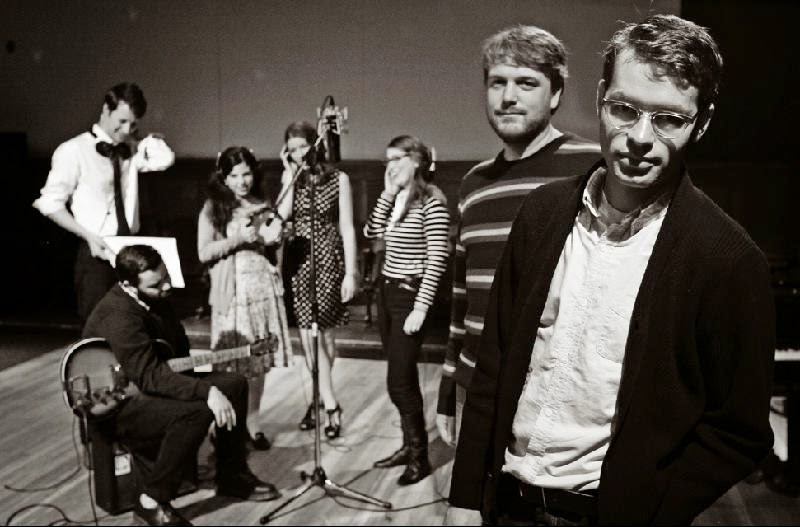
Some of Gigi. Nicholas Krgovich is on the right.


You know that melancholy feeling you get when you finish a great book that you wished would never end? That's how I feel about the sole Gigi album, Maintenant. I want there to be more. 

Gigi was the songwriting project of Nicholas Krgovich, who's probably better known for his other bands, P:ano and No Kids. He makes solo recordings now, and has a recent album called Who Cares? But Gigi is my favorite thing that he's done.

Conceived as a throwback to the '60s, the Gigi album featured indie artists performing retro-sounding songs with vocal choruses and actual arrangements (as opposed to the everyone-plays-at-once-from-start-to-finish instrumental approach that characterizes a lot of pop/rock music). The album was recorded at Colin Stewart's Hive studios in Vancouver, British Columbia, over a period of years and finally released in early 2010. 

The Pitchfork review of the album bizarrely criticized it for not being a faithful reproduction of the '60s. For example, the reviewer complained that one song mentions shopping malls. As if shopping malls didn't exist in the '60s. The reviewer also criticized it for having too many songs, which is like criticizing food for being too nourishing.  

I still listen to this album regularly. I recently became re-obsessed with the Gigi song "The Marquee," which features Katie Eastburn on vocals, and listened to it endlessly for weeks.

Here's my interview with Nicholas Krgovich from April 29, 2014.


The story on Wikipedia is that Colin Stewart asked you to write the Gigi songs after he got a couple of plate reverb units. Is that the whole story?

More or less. Colin wanted to throw a party at the new studio he had just moved into, so he invited a bunch of musician friends over and asked me to come up with a couple songs that we could record in a "girl group" "Phil Spector" style. The Hive previously had been in a low-ceilinged basement, so I think he was excited by the idea of having a bunch of people in a large room, playing and singing at once, and running everything through the plates. The two songs we did that night ended up bookending the record. All done in one take, mixed to two tracks. Everything else rolled out from there.


Where did the name "Gigi" come from?

Colin always referred to those two songs as the "girl group" recordings, and after the session he burned a CD-R of the mixes, and when I took it home, I labeled it "G.G." with a Sharpie, just 'cause writing "girl group" seemed too weird and too "on the nose." Then I stared at it for a second then changed it to Gigi. My other group at the time, P:ano, just put out a record called Brigadoon, so I think I had Lerner and Lowe on the brain.


How did your songwriting for Gigi differ from your other projects? Did you reference '60s recordings to try to capture their tone, or did you have any particular '60s artists in mind when you wrote the songs? Bacharach? Ray Conniff? The Crystals?

It was very first thought, best thought. The bulk of the songs were written in the winter of 2007, either at the piano in the living room or I would take walks with a dictaphone and just write that way. Quietly singing and recording into it as I went. It was a very natural and fun process. I think if I thought about what I was doing, I wouldn't have been able to do anything. Thinking you can write a song like Bacharach is like thinking you could build the pyramids.


I know that the album took years to finish, but how long did it take you to write all of those songs?

It was spread out over a number of years. The songs from that first session ("No, My Heart Will Go On" and "'Neathe The Streetlights") I wrote in one afternoon. I remember writing "The Hundredth Time" while walking this trail by my house. I think when things are flowing I write fairly quickly. I'm sure I didn't spend any longer than a day on any of the songs. For better or for worse.


You've said that you didn't write the songs for any particular singers. Did the finished recordings come pretty close to how you imagined that they'd sound when you wrote them? Or did you ever end up going in different directions in the studio?

I don't really remember directing the sessions that much. I was pretty interested in the idea of just providing the skeleton of the songs and seeing what would happen. One song, "Strolling Past the Old Graveyard," was a favorite of mine, and when we started running it in the studio, I remember this sinking feeling and just knowing that what was happening was not right at all. So I ran into the control room and got Colin to blast "Nothing But a Heartache" over the speakers, and then almost immediately we were off to the races again. Also, because everything was being performed live without real detailed charts, what was happening was a bit of a whirl. It was just fortunate that the songs came out with the sprit that they did.


What did you think about the finished album? Were you satisfied?

Yeah. But also, at the time, the relief and satisfaction that came with knowing it was finished and was out in the world was almost the most exciting thing about it. It took so long to come together, and then once it was mixed and ready to go, it took so long for it to actually be released, so I was just really into being able to hold this thing that was the culmination of such a beautiful group effort.


Has the album had any aftereffects? It should have been a launching pad for some careers. For example, Katie Eastburn should have become the mainstream pop world's new Dusty Springfield or Dionne Warwick after her awesome performance of "The Marquee."

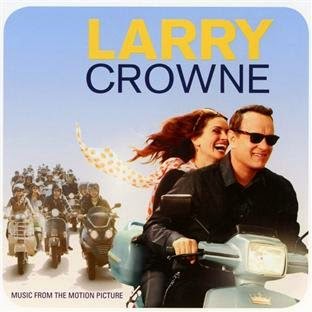
Well, I completely agree with you. Katie Eastburn is one of my favorite living singers. Maybe my most favorite. And has been for years. It actually brings me great sadness that she is not more widely known. But in my own mind, she's a superstar blasting into the stratosphere. As far as aftereffects, I'm not really sure. I mean, that one song ["The Hundredth Time"] was in that Tom Hanks movie, Larry Crowne. This person in Portugal once told me at a bar that he listens to it at least once a day.


Your songs with P:ano, No Kids, and solo are pretty different from a lot of the songs you wrote for Gigi. Do you see a common thread through them, or do you feel like you were doing something very different with Gigi?

Well, it was for a specific project. The end game was always "classic pop." So, with that comes some pretty specific and rigid guidelines. Most of which I tried to keep in mind, but even still, there's quite a few windy melodies and fudged rhymes, et cetera. Signifiers of an NK record.


Do you think you'll ever do another project like Gigi? Or would you like to?

I'd like to, but it seems awfully audacious to me right now. "I'm going to make a Phil Spector record." What kind of thing is that to say? I'm not sure I have that in me at the moment. I do feel like, if we do make another Gigi record, I'd like it to sound a lot dirtier. Be a lot wilder and stranger. More minimal. I guess this points to me having to find the gall to say, "I'm going to make a Joe Meek record." Then we'll see what happens.


A partial inventory of Gigi collaborators

Read the full list on Allmusic.com


Gigi discography


Maintenant (Tomlab, 2010)

  • No, My Heart Will Go On / The Hundredth Time (with Duffy Driediger & Ryan Peters)/ Dreams of Romance (with Zac Pennington) / Alone at the Pier (with Rose Melberg)/ Everyone Can Tell (with Ryan Beattie) / One Woman Show (with Joey Cook) / I'm Not Coming Out Tonight (with Marissa Johnson & Sydney Vermont) / Some Second Best / I Can't Bring Myself to Smile (with Bobby Birdman & Katy Davidson) / Strolling Past the Old Graveyard (with Karl Blau) / The Marquee (with Katie Eastburn) / Impossible Love / Won't Someone Tell Me Please (with Mirah) / I'll Quit (with Owen Pallett) / 'Neath the Streetlights (with Nick Krgovich)


The Hundredth Time 7" (K Records IPU128, 2010)

  • The Hundredth Time // Some Second Best


Larry Crowne: Music from the Motion Picture (Rhino Records)
  • Includes "The Hundredth Time"


Listen to Gigi's "The Marquee," featuring Katie Eastburn: