Wednesday, February 5, 2014

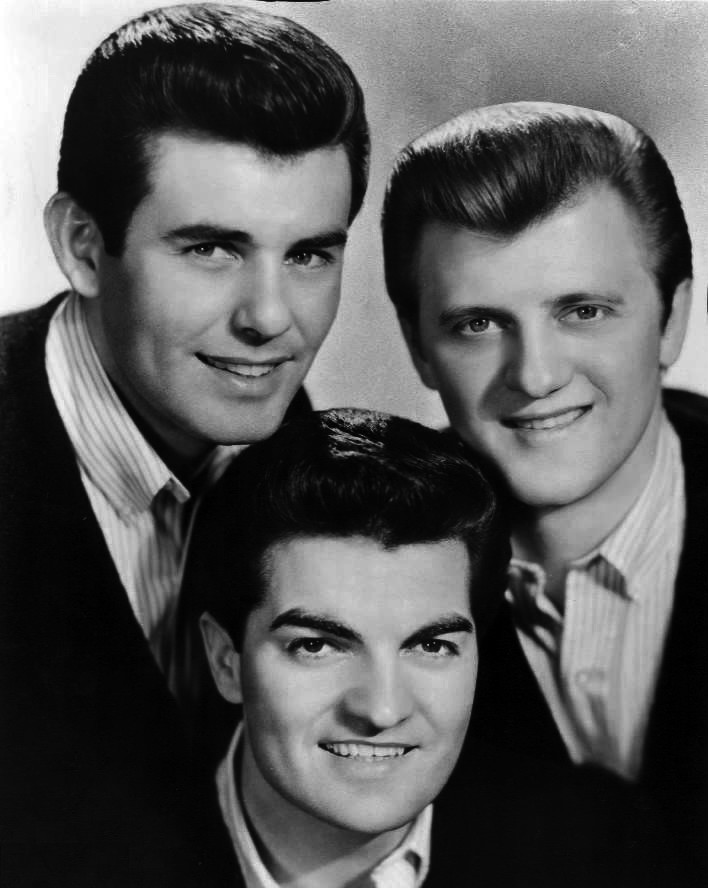
Music Weird interviews Gary Pike of the Lettermen


If you love pop vocal groups, as I do, then you're probably a fan of the Lettermen. 

But if you were around in the early '60s, you might have thought for a moment that the Lettermen were just another male pop vocal group on Capitol Records, the home of the Four Preps and the Four Freshmen. They weren't. 

The Lettermen, unlike all of their vocal group peers, went on to have a 15-year career on the international pop charts. Their name might have been retro, but their sound was progressive. 

They hung out a few times with the Beach Boys, with whom they shared a producer (Nick Venet), and they worked like crazy to make excellent music and put on first-rate shows. The quality of their recordings was uniformly high. 

The original Lettermen, when the group formed in 1959, were Jim Pike, Tony Butala, and Bob Engemann. In 1967, Gary Pike, who was Jim's brother, took over for Engemann. 

The original lineup created some of the most sublime harmonies of the '60s on hits such as "The Way You Look Tonight," "When I Fall in Love," and "Theme from 'A Summer Place'." 

After Gary joined, the Lettermen kept cranking out the hits with "Goin' Out of My Head/Can't Take My Eyes Off You," "Put Your Head on My Shoulders," "Hurt So Bad" and John Lennon's "Love," among many others. 

Gary is on the right on this album cover: 


Music Weird talked to Gary on February 5, 2014:


The Lettermen stayed popular much longer than other male pop vocal groups from that time. Why?

Couple of reasons. We managed to have a hit every year, which kept us on the map. Our albums always sold well because we took care to put them together well.

None of us were songwriters, so we usually recorded old standards or songs that were popular at the time, and made great effort at doing good arrangements and really actually improving on the songs. The other thing is, we really worked hard to do a good show in person. We toured a lot and did a lot of shows. We were entertaining in person. We didn’t just stand there and sing our songs. We did comedy, more like a variety show or Wayne Newton but not as campy. We did a lot of TV.


The Lettermen’s sound was unique and very forward-looking. What do you think made it different?

It was unique. All of us were basically baritones. There was no bass and no real tenor. In a few songs, the top part was in falsetto, which was done by my brother Jim on these early albums. When I joined the group we shared doing the top part because our voices are very similar and many consider this the Lettermen signature sound.

The melody on many songs would change hands throughout the course of the song, so one person wasn’t singing the melody all the way through.

Because we were all baritones, we tried to keep the arrangements as close as possible, in a cluster. The parts were really close, so the melody would go along, the second part would cross above and below the melody, keeping the harmonies very tight.

The melody was in there, but it was surrounded by harmony parts. That was similar to the way the Four Freshmen did their arrangements. Brian Wilson of the Beach Boys was a big Four Freshmen fan too, and they [the Beach Boys] were on Capitol the same time as the Lettermen.

A couple of times before the Beach Boys had their first hit the Lettermen and the Beach Boys met in the parking lot at Capitol and sang Four Freshmen songs.


You mentioned the Four Freshmen, but can you talk about some of the other groups that influenced the Lettermen, and what you took from them?

My brother Jim had a group called the Damons and they were big Four Freshmen fans. There were three guys and a girl. The Four Freshmen hooked up a lot with Stan Kenton, and the Damons did too. Jim became quite good friends with Bob Flanagan [the lead singer of the Four Freshmen]. So, the Four Freshmen were really a big influence.

The Hi-Lo’s were another group that had really tight harmonies. They had that jazzy sound too. Jim didn’t want to go quite that modern with the Lettermen—he wanted to be more commercial.

All three of the Lettermen were excellent soloists and musicians and paid their dues in other groups and knew what was up, and had those tight arrangements.


A lot of the albums were thematic. Did the Lettermen get to choose the themes, or did Capitol influence the repertoire?

The Lettermen were contracted for three-and-a-half albums a year, which was a lot. Whenever an album was due, which was quite often, sometimes a slight theme would be thrown out there, and everyone had input. We’d sit down with Nick Venet and discuss them and weed out songs. It was kind of a communal effort from everyone.

We all had input, but it all had to go through Jim. He and Nick Venet had final say. Later, we’d just pick the songs for the album and record it and give it to Capitol. Not to say that every song was picked by us—sometimes the producer would have a song for the album that we liked—but the artistic end of it was primarily the Lettermen.


Can you talk a little bit about the early Lettermen stuff?

The first song that was released on Warner Bros., “Their Hearts Were Full of Spring,” was recorded by Jim outside [in an independent studio] and the final master was taken to Warner Bros. 

Jim had previously recorded a single with his first group for Warner Bros. [“Lucy D” b/w “Long Green” by Jim Pike & the Damons] that was not successful.

It was not successful, but Louie Prima and Keely Smith loved the group and wanted them to go on the road with them to sing and be their backup group. The girl singer in the Damons had just gotten married and decided she didn’t want to go on the road, and the Damons broke up. 

“Their Hearts Were Full of Spring” was successful in a few towns. San Francisco. It was #1 in San Francisco. Phoenix. Nationally, it wasn’t successful. So Warner Bros. picked the next two songs. “The Magic Sound” was a novelty record and the guys didn’t want to do it, and that’s basically why they wanted to leave Warner Bros.


What about that “Old Rivers” parody that Jim and Bob did? 

They were in the studio recording and Jim and Bob both were kind of screwing around doing Walter Brennan impressions, and they put Nick Venet on the floor, he was laughing so hard. So he said let’s do a record. It wasn’t released as a Lettermen record. It was just Jim and Bob. Tony wasn’t on the record at all. [Nevertheless, the label said “Tony, Bob & Jimmy.”]


Among the early Lettermen albums, College Standards is the odd one out.

Yeah. They thought all the kids who were teens when they first bought Lettermen records were now in college. Jim brought in Conrad Figueroa, who used to be a Damon, to sing the fourth part on some of those songs.

That wasn’t the only time we had a fourth part. Later, we used the Wrecking Crew a lot in our sessions, and Glen Campbell was one of them, and he sang with us on some songs.


Did you have any surprising international hits?

Oh, yeah. We’ve had a number of hits, especially in the Far East, that were different from the hits we had here.

One of our biggest hits in Japan was “Sealed with a Kiss,” which was on the flip side of "Summer Place."

Not too much European success. We didn’t really have any big hits in Europe.


Sunday, February 2, 2014

Jesse Pearson, AKA Conrad Birdie

Jesse Pearson played Conrad Birdie in the 1963 film Bye Bye Birdie, which is one of my favorite movie musicals. For a guy who starred in such a high-profile film, Pearson has had very little written about him. He had a fascinating career and died too young, so today Music Weird will try to fill in some gaps in the story of this multitalented singer/actor. 


Pearson was born Bobby Wayne Pearson in Seminole, Oklahoma, in 1930. 

His first single was released by New York's Kayo Record Co. in 1959. The A-side was a remake of the Hank Snow song "I'm Movin' On," and the single registered for one week at #105 on the Music Vendor pop chart.


The following year, he cut a couple of unsuccessful singles for Decca.

These efforts as a recording artist got him his gig as Birdie in the Broadway stage production of Bye Bye Birdie. He took over the Birdie role from actor Richard Gautier, who is heard on the 1960 Broadway cast album.

In Bye Bye Birdie, the story of Birdie's celebrity and induction into the Army mirrors the Elvis Presley story, but the name "Conrad Birdie" is a spoof of Conway Twitty's name. (Twitty was an Elvis sound-alike back then.)

Pearson told the story of how he got the role to the Louisiana newspaper Lake Charles American-Press in 1963: 
I came to New York after a recording executive had heard me sing Southern blues at a club in Texas.... The records I cut were never released because while I was singing blues, the country was buying rock 'n' roll. Back I went to the South for club dates.

I cut tapes of my performances and sent them back to the record company. They were having trouble working out arrangements they felt would sell. They called in Charles Strouse, who composed the score for Bye Bye Birdie. When he heard my tapes, he recommended me for the national company of the show. I got the part and spent a year travelling with the show all over the country. 
My records still didn't do anything, but I enjoyed playing the part and gained a lot of valuable experience in both acting and singing. I broke my ankle, was out of the show for a week, then came back and played it with my foot in a cast.
The skin-tight gold lamé suit that Pearson wore in Bye Bye Birdie had to be altered so that the legs could slip over his cast. 

The article went on to say:
Twenty-five-year-old Jesse was born on a house boat in the Louisiana bayou outside New Orleans. His grandfather was a fiery evangelist and brought Jesse along to sing at revivals. The transition to blues was a natural one. The picture has triggered his recording career. Now under contract to RCA, his new single "One Last Kiss" from the picture is in release. 
Being readied for release in a few months is his album, The Glory of Love. "In the past few years," he says, "music has sort of come my way. Standards and blues are getting more and more popular. I'll also be on the soundtrack album being released by RCA." 
Whether people like his performance and music is still to be seen. One thing is certain, though. You'd like Jesse—he's a natural, smiling, warm guy.

When Bye Bye Birdie was made into a film, Pearson kept the Birdie role, making the rare transition from the stage to the screen. He performs a few songs on the 1963 Bye Bye Birdie soundtrack album: "Honestly Sincere," "One Last Kiss," and "A Lot of Living to Do." 

The album spent over a year on the Billboard album chart, including two weeks at #2. 

As the Lake Charles Press-American article mentioned, RCA Victor released Pearson's version of "One Last Kiss" as a single. Pearson's single wasn't a hit, but Bobby Vee's cover version reached #112 on Billboard's "bubbling under" chart and #91 in Cash Box

For the rest of the '60s, Pearson mostly appeared in television series, especially western and military series such as Death Valley Days, Bonanza, and McHale's Navy. Two of his best-remembered appearances were in The Andy Griffith Show and The Beverly Hillbillies. In both shows, he played a singer. 

In the late '60s, Pearson worked part-time as a secretary for Rod McKuen, and McKuen has quite a bit to say about Pearson on his website. He says that Pearson recorded an unreleased album of love songs (maybe the never-released RCA album Glory of Love that was mentioned in several news stories in 1963?) and an unfinished album of Woody Guthrie songs. 

While working for McKuen, Pearson provided narration for a number of McKuen's album projects: the San Sebastian Strings Sea trilogy (The Sea, Home to the Sea, and The Soft Sea) and two albums of Walt Whitman's erotic poetry that McKuen set to music (Walt Whitman's the Body Electric and The Body Electric-2). 


All of the Sea albums, as well as a complete set of the three, were chart hits. The Sea spent 143 weeks on the Billboard album chart and was awarded a gold record for sales. 

In the '70s, Pearson did a lot of work in narration. Even some of his film credits from the '70s, such as 1978's The Norseman, were for narration. Somewhere in here, he narrated two religious albums for Jaime Mendoza-Nava: And Jesus Said... and Meditation in Psalms. I don't have these albums or any information about them, so feel free to add comments if you do. 

The most surprising chapter in Pearson's life might have been his foray into the adult film business. Under the pseudonym A. Fabritzi, he wrote and directed The Legend of Lady Blue (1978) and wrote the screenplay for Pro-Ball Cheerleaders (1979).  

Keep in mind that this was during the "golden age" of adult film, after screenings of Deep Throat had become hipster happenings and many adult film directors acquired serious artistic aspirations. Even 101 Strings, the orchestral "beautiful music" franchise that was responsible for countless albums of elevator music in the '60s and '70s, recorded two "adults only" erotic albums in the '70s.

(Also, the list of mainstream musicians, composers, actors, screenwriters, and directors who have worked in adult films is long. It includes big stars such as Jackie Chan and Sylvester Stallone.)

The Legend of Lady Blue is a classic golden-age attempt to meld explicit content with sophisticated storytelling. The movie follows a young couple as the boy is drafted and sent off to fight in Vietnam and the girl falls into prostitution. At the end of the film, they meet again and uneasily rekindle their romance. The viewer is left wondering whether they can overcome their traumatic experiences and reconnect, or if their ability to love and be loved is damaged beyond repair. 

Pro-Ball Cheerleaders is an adult comedy. It's remembered today, if at all, for an explicit outdoor scene in the pouring rain that gave actress Lisa De Leeuw pneumonia. It's a goofy, low-budget movie in which none of the football players and cheerleaders look like they could be actual football players or cheerleaders. 

On McKuen's website, he answered a question from a reader who asked if Pearson was gay. McKuen replied, "[I]f I knew the answer to your query I probably wouldn't tell you anyway." (Read what Pearson's cousin has to say about the topic here.)

Anyway, that was the end of the line for Pearson. He had cancer and moved back to Monroe, Louisiana, to be with his mother. He died on December 5, 1979, at the age of 49.

Some people seem to think that Pearson disappeared or faded away after Bye Bye Birdie, but, cumulatively, his albums were on the pop charts for over three years in the late '60s and early '70s! He was awarded a gold record! He continued to rack up album, film, and television credits right up to the end of his life! 

Pearson was a cool guy with an interesting career, and a much better singer than even his performances in Bye Bye Birdie suggest. 


Jesse/Jess Pearson discography


Singles

I'm Movin' On/Here Comes My Baby (Kayo 500, 1959)
This remake of Hank Snow's "I'm Movin' On" registered at #105 on the Music Vendor pop chart in 1959.

Finger Prints b/w Some Enchanted Evening (Decca 31068, 1960)
(Billboard said of "Finger Prints," "Jesse Pearson, with a style somewhat similar to Ivory Joe Hunter, sells this touching ballad with warmth. It could get coins." Of "Some Enchanted Evening," Billboard said, "Jesse Pearson comes thru with an interesting reading of the familiar Rodgers and Hammerstein tune.")

Next Stop, Paradise b/w Thinking Tonight of My Blue Eyes (Decca 31117, 1960)
(Billboard said of "Next Stop, Paradise," "Strong piece of material, which was out a few years ago, receives a first-rate reading by the chanter, over backing with a beat by the ork. Side has a chance. Watch it." Of "Thinking Tonight of My Blue Eyes," Billboard said, "The familiar standard is sung neatly here by the singer, accompanied by a chorus. Two listenable sides.")

One Last Kiss b/w By My Side (RCA Victor 8173, 1963)

I've Got a Feelin' I'm Falling b/w Talk to Me Baby (RCA Victor 8283, 1964)

Woody Guthrie's We Ain't Down Yet (Cream CR-7609, 1976)


Albums 

Bye Bye Birdie original soundtrack (RCA Victor LSO-1081, 1963)

The Glory of Love (RCA Victor, unreleased, 1963)

The Sea LP (San Sebastian Strings; narrated by Jesse Pearson) (Warner Bros. WB 1670, 1967)

Home to the Sea (San Sebastian Strings; narrated by Jesse Pearson) (Warner Bros./Seven Arts WS 1764, 1968)

Walt Whitman's the Body Electric (Rod McKuen; narrated by Jesse Pearson)

The Soft Sea LP (San Sebastian Strings; narrated by Jesse Pearson) (Warner Bros. WB 1839, 1970)

The Body Electric-2: Walt Whitman's Timeless Words Set to Music (Rod McKuen; narrated by Jesse Pearson) (Discus DS 7005, 1970)

Woody Guthrie's We Ain't Down Yet LP (various artists; narrated by Jess Pearson) (Cream CR 1002, 1976)
(This various-artists LP featured artists such as Hoyt Axton, John Hartford, Ramblin' Jack Elliot, and Arlo Guthrie recreating the original Woody Guthrie Folkways album. Pearson narrated the part that actor Will Geer narrated on the original.)

And Jesus Said... LP (Jaime Mendoza Nava; narrated by Jess Pearson) (Mark I MI-S-102, 19??)

Meditations in Psalms (Jaime Mendoza Nava; narrated by Jess Pearson) (Mark I ??, 19??)


Filmography


See Pearson's pages on the Internet Movie Database for a complete list of his television and film appearances. 

Sunday, January 26, 2014

Joe Dowell: An insanely complete post-Smash/Mercury discography


Praguefrank's excellent Country Music Discographies website says on its Joe Dowell page that "info is very hard to find" on Joe Dowell's recordings after he left the Smash/Mercury labels. 

The Music Weird comes to the rescue with an insanely complete discography of Dowell's later recordings. 

Joe Dowell was born in Bloomington, Indiana, and scored a #1 pop hit in 1961 with "Wooden Heart," a song that Elvis performed in G.I. Blues. RCA Victor didn't release Elvis' version as a single, so Smash Records had the then-unknown Dowell record it. 

Dowell's later hits included "Bridge of Love" and the novelty song "Little Red Rented Rowboat," the latter of which caused a mild controversy with its lyric about bikinis. 

Most of Dowell's Smash and Mercury recordings can be found on the CD Wooden Heart, which I produced for the German Bear Family Records label years ago and is still available. The booklet tells the whole story of "Wooden Heart." 

So, on with the discography:


Joe Dowell's post-Smash/Mercury discography


Singles 


If I Could Find Out What Is Wrong b/w Indian Summer Days (Monument MN45-952, 1966)

Christmas in Ann Arbor b/w Patapan (A French Christmas Song) (Journey [no catalog number], 1972-73)

Big River b/w same (Westinghouse Power Systems, 1973)

Those Darn Inflation Blues b/w same (Journey promo JD 413, 1973) 

Those Darn Inflation Blues b/w Jesus in the Midst of My Day (Journey JD 413, 1973)

Two Hearts b/w same (Journey JD 414, 1974)

The Spirit of 76 (W.D. Boyce Council NR7609, 1976)
(A four-song 7" EP for the Boy Scouts of America)

Joe Dowell Sings for Ann Arbor Federal Savings (No label [no catalog number], 197?)
  • Wooden Heart / Shenandoah / Riddle Song // Streets of Laredo / Green Grow the Lilacs / Leatherwing Bat
Joe Dowell Sings for Second Federal (No label [no catalog number], 197?)

  • Wooden Heart / Shenandoah / Riddle Song // Streets of Laredo / Green Grow the Lilacs / Leatherwing Bat
Homeward on the Wind b/w same (Journey 1238, 1985)

Homeward on the Wind b/w The Symphony of Dawn (Journey promo 1238, 1985)

New Nails b/w same (Journey promo JO-8502, 1985?)

Albums


Joe Dowell Sings Folk Songs (DMR Records RR4M-5063-5064, 1964)
  • Jamaica Farewell / Times Are Gettin' Hard / Leatherwing Bat / Green Leaves of Summer / Tell Ol' Bill / Peter Gray / Shanghaied // Hey There, Honey / Try to Remember / Lemon Tree / The Cockle Box / Cute Little Window / Donna, Donna / Freight Train

Joe Dowell Sings for C.R.O.P. (CROP 29056/AV 683, 196?)
(This album for the Church World Service Hunger Appeal in Elkhart, Indiana, contains a 13-minute radio show, seven PSAs that include excerpts of Joe Dowell singing "Wooden Heart," "Big River," and "After the Rainfall," and the full recording of Dowell's "When I Was Hungry")
  • Singing for Their Supper // PSA 1 / PSA 2 / PSA 3 / PSA 4 / PSA 5 / PSA 6 / PSA 7 / When I Was Hungry

Of Earth & Heaven (Journey RDS-1 NR18504, 2002?)
(String arrangements and production by Bill Pursell of "Our Winter Love" fame)
  • Song of Questions / Stay Where You Are / Jesus in the Midst of My Day / Symphony of Dawn / New Nails / Comin' Back to Life / Only in Thee / His Sunrise Prayer / The Vision / Tonight You Brought Me Home

Joe Dowell & Friends BGA Benefit Concert (Bloomington Grove Academy CD-R, 2002)
  • Fly Me to the Moon / Wooden Heart / The Summer Wind / I've Got the Sun in the Morning & the Moon at Night / Don't Think Twice / It's More than a Tattered Flag / My Cup Runneth Over / Old Man River / Nice and Easy / Try to Remember / Moszkowski No. 11 in Ab Major / Sleepwalk / Steel Guitar Rag / Jamaica Farewell / Symphony of Dawn / The Last Thing on My Mind / Unchained Melody / Young at Heart


Radio jingles


Friday, January 24, 2014

Pants Yell!: A retrospective

The Pants Yell! fan group on Facebook was called Pants Yell! have changed my life for the better! Let them change yours!

That's the depth of feeling that people had for this quiet, bookish indie pop band from Boston.

Nevertheless, Wikipedia deleted its article on Pants Yell!, claiming that the band failed to meet Wikipedia’s notability guidelines. “Never released an album on a notable label,” the editors said. “Insufficient 3rd party notability.”

That really pissed me off.

For one thing, I consider Slumberland to be a notable label, and so does Wikipedia, because Wikipedia has a long article about Slumberland. (Slumberland released the final Pants Yell! album, Received Pronunciation, in 2009.)

For another thing, as a third party, I consider Pants Yell! to have great third-party notability. In 2009, I said that if Pants Yell! played at NYC Popfest, I’d go. They did, and I went. I traveled from Bloomington, Indiana, to New York to see them. Fans rarely fly across the country to see non-notable bands perform.

I’m glad I went, because I got to see the band play at the Bell House in Brooklyn at one of their last shows before they broke up. I wasn’t thrilled that they played only one old song, and that their hard-rocking performance was more Josef K than Go-Betweens, but I was still happy to be there.

After Pants Yell! broke up, singer/songwriter/guitarist Andrew Churchman started a new band called CUFFS that has released a handful of recordings. They’re pretty good. 

But I count Pants Yell! among my favorite bands, so here’s my short annotated discography of a great, notable band:

Our Horse Calls (Best Kept Secret, 2003)


The first Pants Yell! album was released on cassette only. It’s a sonogram of Pants Yell! in the womb: a primitive, homespun affair with cheesy keyboards, out-of-tune guitars, and a lot of songs that don’t have choruses.

Songs for Siblings (Asaurus, 2004)


Songs for Siblings shed the coarseness and clatter of Our Horse Calls to sustain the naïve, melancholy, and sensitive vibe that I think of as the Pants Yell! sound. The album has some strong songs—it’s a great leap forward from the cassette debut. Contains a re-recording of “Onward, Sailboat” from Our Horse Calls.

(A lot of the Asaurus catalog, by the way, can be downloaded for free on Bandcamp.)

’83 in ’05 EP (Paper Cities, 2005)


The title track apparently updates “’83 in ‘03” from Our Horse Calls500 copies were pressed. I don’t have this record. 

Recent Drama (Asaurus/Paper Cities, 2006)


Recent Drama is the first great Pants Yell! album. This album showed that Pants Yell! could become an object of abiding indie-pop adoration like the Go-Betweens or Felt. Melodically, lyrically, instrumentally, this album delivers. “Your Feelings Don’t Show” is awesome and disproves Robert Forster’s second rule of rock and roll: "The second-last song on every album is the weakest.”

Live in a Living Room EP (2007, Soft Abuse)


Only 60 of these lathe-cut, 4-song EPs were made, and they came with a CD-R of demo recordings, a button, and a poster. The EP includes the song “Southend-on-Sea” from Recent Drama and “The Not-So City Life” from the ’83 in ’05 EP. The CD-R included the band’s version of the Bob Seger song “Still the Same,” which is just weird. I tried to buy this, but it had already sold out.

Alison Statton (Soft Abuse, 2007)


Named after the lead singer of Young Marble Giants and Devine & Statton, Alison Statton is my favorite Pants Yell! album. I can’t even guess how many times I’ve listened to this album.

In a discussion of music and autobiographical memory, Elizabeth Hellmuth Margulis said, “Music has this special ability to get welded with things that happen to us in our lives.” Alison Statton is an album that is welded to me. I listened to it a lot during a tumultuous time, and it was like a friend that I could lean on.

I loved the horns. And the guitars on "Magenta and Green." Some of the songs had a harder edge, which was okay with me in moderation. Great lyrics.   

Received Pronunciation (Slumberland, 2009)


I was so disappointed in this album when it came out, because it didn’t meet my expectations. At the time, I thought it rocked harder than I wanted it to, and I expected the band’s instrumental arrangements to become more elaborate, like Alison Statton did with the horns. Instead, it seemed raw.

Then the band broke up and that was that.

Years later, I played through all of my Pants Yell! albums while I painted my house, and I listened to Received Pronunciation again for the first time in years. It didn’t match my memory of it at all. The album sounds like good ol’ Pants Yell!, and the guitar playing on “Got to Stop" is impressive. Maybe I was just in a bad mood when I bought it.

Stray tracks (that I know of):


“Tram #7 to Heaven” – OAsaurus Records EP Club #10It's a sleepy rendition of the Jens Lekman song and is similar in tone to Lekman’s original.


“B.O.C. Theme,” "Public Gardens," "Still the Same" – On the Asaurus compilation You Already Have Way Too Many CD-Rs.


“When Your Friends Aren’t Looking” – On the Japanese version of Alison Statton and also the Slumberland anthology Slumberland Records: The First 20 Years. A good song that sounds like a demo recording. A nice find for anyone who loves Alison Statton and wants more. 


Tuesday, January 21, 2014

The story of "Ruby Duby Du"

“Ruby Duby Du” was first heard in the 1960 MGM film Key Witness. The version in the film was performed by Charles Wolcott.

Paul Glass, the owner of Chicago’s Chief and USA labels, sensed the song's commercial potential, so he hired some studio musicians to record the tune and released the single under his son’s first and middle names: Tobin Matthews. (First pressings of the record accidentally spelled it "Mathews.")

When the Matthews record began to move—eventually reaching #1 in Chicago—Glass had to scramble to produce a “real” Tobin Matthews who could make personal appearances. He hired Willy Henson, the lead singer of a local group called Willy & the Jeepers, who had been bringing him acetates in an attempt to get a record deal.

Ronnie Lane, a former Jeeper, says that the Jeepers were so popular in Chicago that blues legend Willie Dixon offered to manage them. 

Even though Henson didn’t participate in the recording of “Ruby Duby Du,” he was soon playing gigs with Chuck Berry, Johnny Tillotson, and Tony Orlando to support the record. 

Henson kept "Tobin Matthews" as his stage name and recorded some singles for Chief on which he actually performed. He went on to record for Columbia and Warner Bros. under that name.

Last I heard, Henson lived in Fair Oaks, Indiana. I talked to him years ago, and it seems that no one can remember the names of the hired musicians who actually played on the Matthews version of "Ruby Duby Du." Phil Upchurch was rumored to be the guitarist, but I asked Upchurch about it and he had no memory of the record. 


Charles Wolcott, for his part, was a music director at MGM studios when he recorded “Ruby Duby Du” for Key Witness.

Although Matthews had the higher-charting hit, Wolcott’s record is the original version. Both versions peaked at #27 in Cash Box, but the Bill Gavin Record Report said that Tobin Matthews’ version was selling three to one over the Wolcott soundtrack recording. 

Other covers of "Ruby Duby Du" appeared as well, including versions by the Ted Heath Orchestra, Joanie Sommers, and the Volcanoes. 

Wolcott had previously worked as a musical director at Walt Disney Studios, where he wrote music for films such as Bambi, Song Of The South, and The Three Caballeros. He had a hit in 1944 with “Tico Tico,” which is featured in the 1942 Disney film Saludos Amigos, and he supposedly was responsible for the inclusion of Bill Haley’s “Rock Around The Clock” in the film Blackboard Jungle.

Here's the Wolcott version of "Ruby Duby Du":